Author: aradwin

  • Shock and Grief: An Israel Solidarity Gathering

    Shock and Grief: An Israel Solidarity Gathering

    On Tuesday night, our local JCC hosted a gathering in solidarity for Israel. I’m not sure if it was billed as a gathering or a rally, and I’m not sure why exactly I wanted to go, but after a brutal and isolating few days, it seemed like it might feel better to be with people who were looking at the same newsreels as I was. It would not be until much later that I could articulate exactly what I longed for.

    For months, I have been going to rallies with UnXeptable to demonstrate against the Israeli government’s proposed judicial reforms. The announcement for this solidarity gathering came over the same channels, created by the huge upswell of attention directed to Israel. In our larger community, there has been no shortage of Israeli flags waved, worn on the shoulders, put on posters, decorating every surface at these rallies.

    I was sure that people would show up; would the flags show up? Is that what solidarity means? It’s been whiplash to track what the flag means. Last week, waving the flag was a nationalistic symbol of protest, but waving that same flag today felt like it might mean support of a government that had just let down its people spectacularly. Who could bring themselves to either express pride or critique of the Israeli government? Would people from UnXeptable, a cosponsor of this gathering, bring their flags, or would they find it slightly tainted by the protests? I didn’t bring mine.

    The organizers of the event didn’t know how many people to expect; they set up 250 chairs. Palo Alto police stood by as we entered a long line through a metal detector. Eventually close to 2,000 people entered to stand for a rally that included speeches, music, and prayer. 

    I got my answer quickly about the flags. There were a few large flags, but mostly people had brought little ones, not through any coordinated action, but because that was what felt right in the moment. They wanted to proclaim solidarity, but the size of the flags made it clear: this was no rally.

    The Israeli Consul General spoke, promising that this would be seen to herald the end of Hamas, as Israel would exact its revenge. Our State Senator, Josh Becker, spoke of his own relationship to Israel, the political connections which stand in support of the Jewish community at this time, as well as the other political caucuses which stand ready to support Israel. Our State Assemblyman spoke. There was applause, but not raucous attention.

    A QR code had led us to the words for the songs that were performed from the stage, but nobody felt like singing. There were prayers from Rabbis, addresses from the JCRC and the Federation. Somewhere in there, it began to rain, a sudden and light dusting of sorrow on top of sorrow. And finally, the gathering ended with the national anthem of Israel, HaTikvah. Even then, only a few lips parted to eke out a near-silent recitation. I had thought this would be the stirring moment— why else had people come but to express the enduring hope of a safe homeland for Jews, free people in our land?

    As a couple of thousand people began to file out, I caught the eye of a friend of mine and I headed her way. She saw me too, and she burst into tears, before I could even reach her. We held each other— a long hug, my eyes brimmed over and over with the permission she had given me to cry.

    We finally parted and holding hands, she looked at me, and said, “I can’t believe this happened. I mean, did this even happen?” She gestured around at all of the speakers and microphones, the podium, the flag still flying near the camera that had recorded the event. But I knew that what she meant was the massacres, the rapes, the beheadings, the slaughters, the hostages, the kidnapped babies and grandparents and lovers and soldiers.

    Did it happen?

    All of a sudden, I understood the reason I had come, why everyone had come. It wasn’t to be stirred to action, either militarily, politically, or with donations, although we did want all of that— or we would, eventually. It wasn’t to be reassured or to be protected or to see friends, although that was all comforting as well. 

    It was really much more simple.

    I had come to affirm that this violent massacre had in fact happened. It was still so unbelievable, in the most literal sense of the word. I now realized that I was struggling to understand that what was plainly true in the world had actually happened. And it’s ridiculous to say that, because it’s not like I had any doubt that it had occurred.

    But it’s the same reason that when you go to a movie and you see something crazy happen, you want to tap the person next to you and say, “hey, did you just see that?” And then they nod that they did, and then you can go back to watching. It’s that desire to confirm with other people that they are watching the world in the way that you are. 

    All I wanted to hear, really, was “I woke up on Saturday. I couldn’t believe what the news was reporting.” I had an endless appetite to hear how people heard, what they did first, how they began to turn their shock from disbelief into some other emotion. I wanted to hear people recount what they did in those first hours, how they reached out to friends and family in Israel, what they heard, what they thought in the next hours, how they came to be thinking about things now. I wanted to hear stories of those who had fallen, to remind myself of their memory, of the fact that they used to be with us, and now they wouldn’t ever again. I was looking, simply, for validation in my primary feeling, which was shock. It’s almost like, from the United States, where the world hums on as usual, you could forget for a moment that it all happened and I was guarding against that.

    I’m going to confess that when I first saw the news on Saturday morning, I didn’t take in the full import of it. I thought, for at least an hour, that it was a larger version of the border skirmishes I had already categorized in my mind as part of the Israel-Palestinian conflict. I already had a lot of thoughts about Gaza and Israel’s 2005 withdrawal and ongoing hand washing of a horrible situation they had helped bring about. 

    I didn’t understand in those first hours. It was before the videos started circulating. It was before the news was reporting— before even the army got there. It was before I understood about the hostages, or the systematic planning of the attack. It took time to dawn on me— and has been dawning on me ever since— just how bleak this is, how different it is from what came before, how far the implications might go. Arguably, I am still in shock.

    Shock is, in many respects, an unbearable feeling itself, and it wants to give way— to outrage, to anger, to helping, to grief, to promises of never being caught so off guard again. We’re on day six now, so already the community is starting to splinter into those different reactions. Some of them feel better to me than others. But I’m going to stay here just a moment longer, because part of me still needs to just say it again: yes, it really did just happen. Two-thousand people, the tiniest sliver, showed up next to me on Tuesday night to say so. 

  • Mastering the Rubik’s Cube: On Accomplishment

    Mastering the Rubik’s Cube: On Accomplishment

    My twelve-year-old (they/them) taught themself how to solve a Rubik’s cube last year. At their request, I printed out a few pages of the algorithm before we headed to a large gathering, and thought it would be a good way for them to entertain themself. A couple of hours later, it became clear that although I had previously found instructions that, when followed scrupulously, allowed me to solve the cube, these instructions were too difficult, even for me. 

    We sat together, and I insisted on starting over, from the beginning, one too many times. 

    “Can’t we please just go home?” they begged. “I want to find a solution on YouTube!”

    My child grabbed the half-solved cube out of my hands, not patient enough to let me try again, but desperate to complete the project.

    “You know what?” I changed tactics. “I bet that there’s someone here who knows how to solve it.” At a large gathering, there had to be, right?

    The first people I ever met who could solve the cube seemed to do a good bit more than that. One summer in high school, I spent a summer at a mathematics program where we gathered around complicated problems in the morning and biked or played card games in the afternoon. There, several of my classmates raced to solve the cube faster than one another. One of them could also give it a good look, put it behind his back and produce a perfect cube half a minute later. This seemed like a particular kind of unachievable genius to me, some peculiar talent that they were born with, the Rubik’s cube equivalent of Mozart, who composed his first piece of music before other children his age learned to read. 

    Now, as an adult, I have been let in on the secret. Like most everything else, solving the Rubik’s cube is a skill that can be practiced. The kid who solved it behind his back once first clumsily practiced clunky algorithms. He did it slowly, he looked at the cube, he performed a few twists and evaluated how the cube changed. She studied it, she solved it over and over, she handed it to a friend to scramble it for her, she did it again.

    When I was younger, I wondered only how these kids managed to do it. Now, a different question occurs to me about it. Now, my question is: why?

    I recently was reading Adam Gopink’s book The Real Work: On the Mystery of Mastery. Part of the claim that he makes in that book is that we overestimate the work of some particular masters, but that mastery itself is evident in abundance. For example, we venerate some particular celebrity musicians with magical fingering (or early composition skills, as I did, above) while neglecting to see how incredibly widespread musical skills are. There are lots of people who can play an instrument, compose music, or just jam with a group. 

    I keep coming across little videos where a vacant piano in a public place beckons some of them. Here is a particular charming one that I saw yesterday, where two strangers hit the piano together, and over the course of the video, you see them getting better and better and their collaborative effort to make music. Tentative efforts to play a particular piece shift in mood and force and wow, is it ever fun to watch!

    Just the same, there are lots of people who can solve a Rubik’s cube. In fact, as I wandered around with my kiddo, it only took a couple of minutes before they took tutelage from an older teen, who assured them that they had done the hard part, now a few twists would bring it to completion.

    Why is it so (relatively) easy to find someone who can do this?

    Solving a Rubik’s cube is a parlor trick. There is no real reward for it the way there are for other pursuits. When children put that much effort into learning an instrument, we gather in front of them to watch their recitals and applaud. When they put that much effort into their schoolwork, they are rewarded with good grades and teacherly approval and scholastic achievement. If they put that much effort into a trade or art, they often make money at it, even as teenagers.

    By contrast, nobody gets a job solving Rubik’s cubes, or gets a scholarship to college for their skill, and the general population doesn’t much appreciate the difference between solving it in 45 seconds or 90, or with a more elegant and difficult algorithm.

    I wonder if, in fact, it is the fact of general indifference, married to the thrill of accomplishment that drives the urge forward. 

    In a recent op-ed in the same vein as his book, Adam Gopnik writes a little bit on the distinction between achievement and accomplishment. He describes setting himself on a path of understanding the difference at age 12, when he disappeared into his room for a week with a guitar. According to what he writes, this set a pattern of learning for the rest of his life.

    He writes, with nostalgia and fondness about his young self first experiencing the thrill of accomplishment. Learning an instrument has a particularly tight feedback loop, because it is easy to figure out right away what sounds good, which is part of what he learned that week. And sometimes, this kind of learning does turn into receiving a kind of admiration from the world. Or the admiration could be not so much for the guitar-playing as for the genuine self-driven nature of it— any oxymoron, really. Nobody learns to spin the cube for the societal reward. They do it because they themselves grow high on the thrill of it, and that is the thing to admire; a child learning out of a complete self-driven practice of wanting to get better at something.

    It is a falling in love before most of the hormones for romantic love kick in. It is an addiction to the pleasure of doing something that suits you, for no other reason and no social reward.

    For all of the admiration I have given to kids who can solve the Rubik’s cube (and by now I have met many), I think the main thing that strikes me in my praise is that they don’t really care. They shrug off wowing me or anyone else, because the thing they most care about is wowing themself. 

    My child did indeed figure out the last few steps to solve the cube. I learned this before they told me so, because from across the courtyard, I could see them literally jumping up and down with excitement. Like a little spring, their legs boinged them up and down, hair flopping one way, then the next. They laughed, they beamed, they got a taste of the exquisite pleasure of fulfilling a goal. 

    And eventually, they got really good at solving it. They spent a semester in school practicing during the period where kids were supposed to pursue a “passion project” and then, for the talent show, performed a solution to the cube in under a minute while riding a unicycle around a stage— another skill they had laboriously practiced for no other reason than because they wanted to. 

    They got a fair amount of recognition for that, or perhaps it was for the music they chose to accompany their act, but by now, they’ve moved on. They’ll pick up the Rubik’s cube every once in a while. They have me scramble it, ask me to time them as they deftly put it back together, toss it to me.

    “What was my time?” they ask.

    “Just over a minute,” I reply.

    “Eh.” They shrug. “Not my best time.” Coolly reported. The moment has passed already, they’re ready to move on to the next learning adventure. 

  • Reckoning with Labor on Labor Day

    Reckoning with Labor on Labor Day

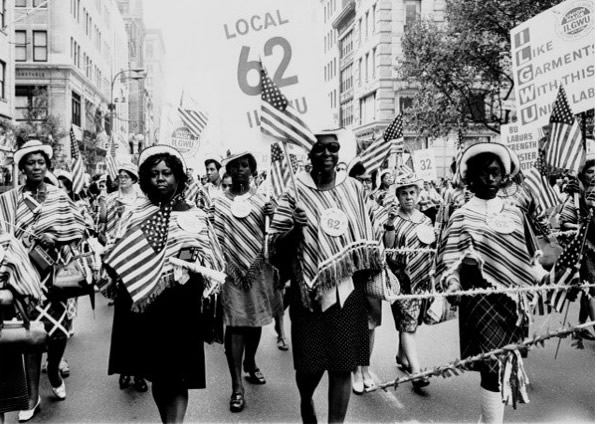
    The official webpage about Labor Day from the Department of Labor has this to say about today’s holiday. (The featured image is also from their website).

    Observed the first Monday in September, Labor Day is an annual celebration of the social and economic achievements of American workers. The holiday is rooted in the late nineteenth century, when labor activists pushed for a federal holiday to recognize the many contributions workers have made to America’s strength, prosperity, and well-being.

    It also includes a history of legislation proclaiming the day, and some squabbles about who first proposed this celebratory holiday. There’s a note about how appropriate it is to celebrate American workers, as their labors have raised the nation’s standard of living, etc, etc. It’s a lovely piece of government wishful thinking, and it doesn’t much help my feeling that today should be a day of mourning, reckoning, or action. Anything but celebration, given the fierce injustices of the American labor market these days. 

    This past week, I picked up the book Poverty, by America authored by Matthew Desmond. The picture he paints is so excruciatingly painful. Do you know that over 5 million Americans subsist on less than $4 a day? Since I have a hard time even imagining that (as I sip my $5.30 coffee at a Palo Alto cafe that I drove to in my car, from my house), Desmond fills it in for me, and oh! On $4 a day, life descends quickly from trying to find food and shelter to resorting to desperate (largely criminal) choices. There are over 1 million homeless children, and the number is trotted out as though they are the more sympathetic victims, as children are always so innocent, thrown into a system of poverty, trapped by choices that other people have made. 

    I will say that Desmond makes it perfectly clear that the adults are just as (or perhaps more) trapped, literally unable to make better and different decisions because the entire point of poverty is how deprived people become of meaningful choices not of their own design.

    But since today is Labor Day, let us focus in on one of the American laborers he introduces us to. Let’s meet Julio, shall we?

    Several years ago, I met Julio Payes, a permanent resident from Guatemala who came to the United States on a work visa. He lived in Emeryville, California, a city of roughly twelve thousand residents, sandwiched between Oakland and Berkeley. In 2014, Julia was working eighty hours a week at two full-time jobs. He began his day with the graveyard shift at a twenty-four-hour McDonald’s, where he served burgers and fries from 10P.M. to 6 A.M. After his shift ended, he had two hours to rest and shower. Then he’d clock in at Aerotek, going anywhere the temp service sent him between 8 A.M. and 4 P.M. When that shift ended, he slept as much as he could. Then it was back to McDonald’s. To stay awake, Julio loaded up on coffee and soda. Each job paid minimum wage.

    “I felt like a zombie,” Julio told me. “No energy. Always sad.” Yet to afford the single unfurnished room he shared with his mother and two siblings, he had to work up to sixteen hours a day, seven days a week. It seemed Julio was either working or sleeping, with no life in between. Once, his younger brother, Alexander, who was eight at the time, told him he was saving money. “I want to buy one hour of your time,” Alexander told his older brother. “How much for one hour to play with me?” Julio looked at his brother and wept. Not long after that, he fainted from exhaustion in the aisle of a grocery store. He was twenty-four. (45).

    I read this passage and took it in and glossed it, because yes, some people are sad and live in desperate situations. We all know this. And then I read it again, and let my heart read it with me, and it literally hurts. It hurts. Sixteen hours a day for seven days every week, and am I supposed to be happy about cheap McFlurries?

    If you read the book (you should, as much as you can bear), you could also meet Crystal, or Woo, or any of the other workers Desmond introduces you to. I have to read his book to meet these people because honestly, it’s the easiest way I have to get introduced to workers like this. 

    Is that shameful on my part?

    It’s worse than that, really. One of the arguments that Desmond presents, after his heartbreaking portrait of poverty, is that this social situation doesn’t just “happen.” It happens because when people like Julio work like that, benefit accrues to other people in the economy. People like me.

    And while I was prepared to think about how increasing labor costs at McDonald’s might drive up prices at McDonald’s, that’s really only the first level. (And also, if we compare with other countries, possibly not even true, but that’s another story).

    There are deeper, more systemic ways that exploitative labor secures myself as a person who doesn’t have the day off on Labor Day because I don’t work in the first place, and even if I did, I could only imagine the sorts of jobs which have paid holidays, which is obviously not likely for workers like Julio. 

    Here is Desmond again:

    Corporate profits rise when labor costs fall. This is why Wall Street is so quick to pummel companies when they bump up wages. When Walmart announced in 2015 that it planned to increase its starting wage to at least $9 an hour, largely in response to public pressure, investors dumped the stock. Shares fell by 10 percent, erasing $20 billion in market value. It was the company’s biggest single-day loss on record. (58)

    It’s surprising to me to be holding Walmart up as an employer trying to do the right thing, because it has such a profound history of labor abuses. Almost half of Walmart shares are owned privately by the Walton family, and I won’t lose sleep about their collective loss of $10 billion both because it is a drop in the bucket for them, and since the loss on the shares probably didn’t come from them, it’s all probably more modest than it ought to have been. But the point is deeper: anyone who is invested in Wall Street (more than half of America, but not poor workers) is not only enjoying more portfolio wealth not only because employers haven’t addressed low wages, but also because exploitative labor serves people who hold capital against people who actually do the labor. 

    If only there were some government agency tasked with fixing this. 

    Oh wait! There is.

    Here is the mission statement of the Department of Labor:

    At the Department of Labor, we’re building a worker-centric economy from the bottom up and the middle out by leveraging federal investments to create good jobs, while protecting workers’ rights, wages, health and safety, and supporting workers’ rights to organize for better conditions. This Labor Day, we’re celebrating workers by building an equitable, empowered workforce for all.

    Are they? Are they “leveraging federal investments to create good jobs, while protecting workers’ rights, wages, health and safety, and supporting workers’ rights to organize for better conditions”? Is the United States government “building a worker-centric economy from the bottom up and middle out”? 

    No, no it is not.

    It’s not their fault, exactly. Maybe they’re desperately trying to accomplish their well-crafted and ambitious mission statement. But the economic structure of our country is called capitalism. It is designed to reward people with capital. It rewards investment, and that means it rewards people who have money to invest. The opposite of a capitalistic system is supposedly socialism, with all its connotations of collectivity and centrality and lack of choice, a proven dud, so to speak.

    I won’t belabor the point, because I don’t need to rehearse what I already think, or put you through what you already think.

    But I do think that maybe there could be an alternative to capitalism whose centrality isn’t about ownership and who owns the means of production. That is, perhaps, ceding the point, agreeing that those who have the most capital have the most power. The opposite of capitalism perhaps should be called laborism, where we all somehow acknowledge that capital itself is useless unless there is someone who is going to do something to put it to work. 

    What if there could be a wild success, of creating “good jobs, while protecting workers’ rights, wages, health and safety”? Wouldn’t that be a most excellent thing to celebrate on a Labor Day?

    Because here’s the end of the story: 

    In 2015, Emeryville considered legislation to raise the minimum wage.  Julio became active in the Fight for $15, marching, striking and praying. In 2015, the legislation passed.

    “When I spoke to Julio in the winter of 2019, he was making $15 an hour at Burger King and $15.69 at a large hotel, where he worked as a room attendant. He could now afford to work less, logging around forty-eight hours a week when things were slow and sixty hours when they weren’t. He slept more, took walks in the park. “It’s had a big impact on my life,” he told me. “I feel better.”

    As Desmond writes, “A higher minimum wage is an antidepressant. It is a sleep aid. A stress reliever.” 

    Perhaps it is dignity itself. There’s no way to put a price on those things, but in some cases, it is still for sale— at rock bottom, Labor-Day-sale prices.

  • The Velveteen Rabbit: On being really real

    The Velveteen Rabbit: On being really real

    Recently, I reread the book the Velveteen Rabbit by Margery Williams. The book was published in 1922 by a then 41-year old Williams, who catapulted forward her writing career with this beloved book. Born in 1881, she was married in 1904. By that point, she had written a few moderately unsuccessful novels, but then she paused her writing to raise her children and when she returned to writing, it was to publish children’s books. All of this is interesting because by the time she writes her most well known book narrated from the point of view of a toy (anticipating Toy Story by almost a century), she was a mother of teenagers who had long passed their moment of losing themselves among their beloved toys. Her sense of the rhythms of childhood, the lifelike way that she can portray both the love of the boy for his stuffed animal, as well as the doting grumbling of a caretaker tracking down the beloved lost toy, positively sings with the perspective of both childhood and motherhood. 

    That said, the book wasn’t as I remembered it at all. If I had been asked to say what the book was about, I would have said that it was a supremely long children’s book, about how real love doesn’t look shiny and sparkly. Rather, when we are truly loved, we show our wear, the velveteen wears off and the stitches pull, and we look a little bit worse for the wear. I would have said that the moral of the story is that to be really loved is not the same thing as being perfect, and in fact, you might have to choose between vulnerability and love on the one hand, or perfection and rejection on the other.

    All of those things are there, so I didn’t exactly misremember. If you don’t recall the story, it is about a stuffed velveteen rabbit who is gifted to a young boy for Christmas. Initially rejected, the bunny learns a lesson from the wise old Skin Horse that to become real is a process, and that “Generally, by the time you are Real, most of your hair has been loved off, and your eyes drop out and you get loose in the joints and very shabby. But these things don’t matter at all.” One day, the boy sleeps with the rabbit and then doesn’t put him down for several months. The rabbit grows shabbier in a summer spent dragged through the mud, until one day the boy tells his caretaker that the bunny is REAL. The surprise for me in re-reading is that this all happens by the exact middle of the book. When the rabbit feels beloved and real, we are still only halfway through the story. 

    And it’s funny that I didn’t remember the rest, because obviously what has happened so far is to talk about being real as a metaphor, where real means loved. But of course, there is such a thing as a real, live rabbit and the Velveteen Rabbit next meets some of them, and he is ashamed. Not of his shabby velveteen fur or the rubbed-off pink on his nose, as we thought he might be, but of the fact that he cannot move, doesn’t have hind legs, is not flesh-and-blood. And he longs to be actually real, the kind of rabbit who can hop along the bracken.

    In the rest of the book, the boy gets scarlet fever, and then his toys need to be burned, and the velveteen rabbit tumbles out of the bag to be burned and a fairy comes and poofs him to magical existence as a living and breathing rabbit, and one day he encounters the boy as a rabbit and not as a toy. He is finally, actually, really real. Marvelous.

    Recently, I read the book God, Human, Animal, Machine by Meghan O’Gieblyn, and the Velveteen Rabbit feels on-topic for the kinds of larger considerations she was writing about. For one thing, O’Gieblyn talks about the human propensity to anthropomorphize the objects around us. One of the more fascinating thoughts I had while reading her work was to consider that we humans are likely to do that with all kinds of objects: inert and lifeless objects, animals, and even with divinity. In all of these cases, we attribute human and lifelike qualities (and especially, motivations) to the things that we encounter.  

    It’s no surprise that a child would carry around a beloved doll or object and consider it real, and it is the insight of a mother to realize that the vividness of the affection makes it real. (One of my kids’ preschool classmates had a beloved butter knife that he used to carry around everywhere. Just in case we ever forget how mysterious children are). 

    But the greater insight is that we don’t really ever stop doing this, even if the play and the unabated affection drops off in adolescence. O’Gieblyn talks about how she got a robot dog shipped to her from Japan, and it wasn’t long before, despite her full knowledge that she was interacting with a machine, she felt cruel to turn it off, and a fondness for it that couldn’t be easily explained. 

    And I’m not so sure that in talking about her robot dog, we wouldn’t use the same language as Williams brings to us in The Velveteen Rabbit: “but it isn’t a real dog/isn’t it curious to have a pet that isn’t real.”

    Which brings up precisely what I thought about reading the Velveteen Rabbit this time, that there are different kinds of real. The one that I remember was the metaphoric one, of being loved. I think that’s what most people think about when they remember the book. 

    But even once that is resolved, there is the whole matter that there is another level of reality. That no matter how loved, there is a difference between a stuffed rabbit and a living rabbit, and only magic can bridge that gap because no amount of love, affection, or positive regard can turn a stuffed animal into a living object.

    Isn’t that exactly how we talk about Artificial Intelligence at the moment? I keep reading accounts written about how some true aspect of humanity can never be mimicked by a machine. A poet points out that a robot can put words together, but because it never directly experiences the world, this difference will show in the end product. A naturalist says that AI will never feel awe in the ways that a human would. A nurse explains that the essence of his job is not keeping tabs on metrics, but rather the unlimited human capacity for empathy for a hurting patient. All of those are jobs that computers will never do, because they are the essence of humanity.

    I don’t know if that’s right or not. For now it feels right. But it’s more the urge to talk about it that way that seems to match what Williams wrote about. The argument is that it is one thing to fool a child, a human, to come securely into the beloved embrace of a human and become real for how well that you do a thing. But no matter how well you do that, there is some magical divide that exists, that no matter how convincingly you can play the part, only magic (or the nursery magic Fairy) can make a beloved pretend-thing into something that lives and breathes and does what living-breathing-things do.

    In other words, there’s REAL and then there’s real. Computer intelligence is getting better and better at one, but not at the other. There’s always going to be some chasm, an experience of humanity that the metaphors of zeros-and-ones can’t cross. The best we’ll have is well-worn and loved velveteen rabbits, never real ones. 

    But then again, that’s the best and most memorable part of the story, isn’t it? Perhaps that’s the only one part that really matters.

  • Musk and Zuck, Or Life in Silicon Valley

    Musk and Zuck, Or Life in Silicon Valley

    Rumors are flying that Mark Zuckerberg, the CEO of Meta, and Elon Musk, the head of Twitter and who knows what else, are negotiating the terms for a fistfight. Er… cage fight? Maybe a martial arts fight?

    Last weekend, Musk all but confirmed the arrangements reported, among other places, in Forbes and Fox Business.

     And then, reports came out that Zuckerberg is calling it all a distraction. You can read about it, for instance, on CNN or Politico.

    Of course, “reported” is a bit of a misnomer because it seems that all that has been happening is that they each have been putting out information on their own platforms: Musk on X (or twitter or whatever it is) and Zuckerberg on Meta’s Threads. And yet it hits the media as “breaking news” on the top news and business websites.

    Last week, when I was out walking through the neighborhood, I saw one of those low-flying planes carrying a banner behind it. First, I heard it and with its slow grinding motor, I knew immediately what it was, and so did Quinn, who was with me.

    The banner was flapping directly behind the plane, although from where we were, we couldn’t yet see what it said. Quinn joked: “It must say: Marry me, right?” What else does a person want to proclaim in the skies?

    “Probably,” I said, lightly imagining a happy couple.

    As it got closer, we had to make out the letters backwards. 

    “Sucks” was the first word we could make out. “Zuck sucks….something

    “Zuck sucks. Elon will win.” All caps. 

    I had to explain to Quinn what it was talking about, and actually it was funny that I even knew. But someone I know at CrossFit knows someone who knows someone who refereed Mark Zuckerberg in a jiu jitsu fight, so when news struck that Mark Zuckerberg and Elon Musk might actually stage an actual fight, this hit a nerve and managed to then hit the chatter during my CrossFit warmup.

    Two men who fight in the ethersphere by sending hostile messages to the public about one another’s companies now want to “take it outside” which in this case, might mean a staged event against the backdrop of Roman ruins and bring their disagreement, the rivalry between their companies, to an opportunity to physically maim one another. It’s supposed to sound all professional and legitimate even though it sounds to me like two powerful men looking forward to punching each other. 

    But I don’t necessarily want to talk about the match, I want to talk about the banner that I saw. I found it— funny. Who is proclaiming what, to whom, and for what purpose? The reason that “marry me” is the proper message is because only someone very intimate could make sure that a person saw it. Nobody can make a person look at the sky, so if you want to write something menacing to a person you don’t really like, it seems like a very poor use of resources. Elon Musk might be unhinged, but this doesn’t really seem like his style to put up— at least not one solitary airplane on one solitary day, and I promise you the skies haven’t been blanketed by these planes.

    What is it trying to say about the match? Or what does it actually say about what it’s like to live in Silicon Valley, alongside billionaires like Musk and Zuckerberg?

    It’s a funny thing to live in a place and then try to describe it, because the first thing that it seems is always going to be “normal.” That is, unless you lived somewhere else and have some grand contrast to draw. Because no matter where you live, there are going to be babies and old people and schools. People are going to go about their daily lives by shopping and cooking and going to restaurants, and watching movies and falling in love, and listening to music. The sidewalks could be in more or less disrepair and different concentrations of homeless people, but that doesn’t get to the heart of what a place is like.

    Recently, I was reading the book of essays Interior States by Meghan O’Gieblyn, and she gives me a different picture, from where she was living in South Chicago in her 20’s, but meant to speak about the midwest as a region:

    Any news of emerging technology was roundly dismissed as unlikely. If I mentioned self-driving cars, or 3-D printers, one of the men would hold up his cell phone and say, “They can’t even figure out how to get us service south of Van Buren.”

    For a long time, I mistook this for cynicism. In reality, it is something more like stoicism, a resistance to excitement that is native to this region… To live here is to develop a wariness of all forms of unqualified optimism; it is to know that progress comes in fits and starts; that whatever promise the future holds, its fruits may very well pass by, on their way to somewhere else. (7) 

    It is curious to think that a place might natively have a resistance to excitement, but if something like that can live in a place, then Silicon Valley must surely be its foil, where enthusiasm and certainty about the next thing thrums through life. 

    If, somewhere in the midwest, people are shaking their heads about the Musk-Zuckerberg fight, saying to themselves or each other, “it’ll never happen,” however, reasonable, that is not what they are doing here.

    Here in Silicon Valley, they are amped up. “Wouldn’t that be so cool?” they say at CrossFit. And “who do you think would win?” while weighing Zuckerberg’s reported discipline and training against Musk’s reported extra-70 pounds. 

    This is the place where we don’t have to imagine self-driving cars. The lot where they are stored is right of San Antonio Road, and they pull out all the time, while the humans in the formerly-driver seats hold their drinks with both hands and nod to me as I look at them curiously on the road. 

    For many years, when they saw them, my kids would shriek “spy car!” and then duck, hoping to avoid being photographed and documented, their privacy invaded. Eventually, it was too often that they had to play this charade. I never did manage to explain that the cars that drove themselves and the cars that photograph the whole world aren’t always the same ones. The spinning camera on the roof was too much of a beacon, imploring them not to trust, that nothing can be trusted here. They are natives to the area, all of them born here, so maybe they know this more authentically than I do.

    To me, living in this place is a curious place of dreams. Much has been said about how the internet was born here, how every idea is the precipice of a fortune, something to be leapt upon and invested in. But I don’t think that’s the way it is. It’s not the faith of dreaming and making it come true, there’s no billboards that proclaim something as grandiose as the idea that if you will it, it can come to fruition. You’re more likely to be told, with great seriousness, that it is a lot of work. That your dream will require business plans and far, far too many meetings with casually dressed men in fancy offices, that it is about the substance of your plan after all, nothing personal, and nothing that you could dress up with fancy words or pantsuits to make it seem more like it is. This is a place which is serious about good ideas, not snake oil. But when it comes to a good idea— why not

    It’s about the business plan, about the ability to make a fortune. The pragmatism and clear-eyed dispassion of talking about a billion dollars of novelty probably isn’t matched anywhere else on the planet. This is one of very few places where quite that much money evaporated overnight. And it’s not “easy come, easy go” so much as it is a conviction that steely eyed assessment of an idea’s potential is the antidote.

    And you know, it’s funny, because it’s not like there aren’t plenty of examples of this not being quite right. From the 2000’s bust that took away all of the adorable pets.com puppet commercials to the more recent bust of Theranos and Elizabeth Holmes’ being carted away to jail, or even the indictment of wunderkind Sam Bankman-Fried, it’d be easy to become more cynical. But in Silicon Valley, those are just discounted anomalies that don’t threaten the story.

    But I suppose, somewhere in the midwest, they’re just as incorrigible, that any recent advance is still going to be met with a cautious, “we’ll see,” is the same thing that can’t constrain the enthusiasm here.

    As they ask me at CrossFit, “Ariella, you into crypto yet?” 

    “Me? No, never,” I say, trying to explain why I don’t buy into investing fads.

    “I dunno,” they say back. “It seems just to be going up.”

    Rules of gravity don’t apply around here. Housing prices just go up. The falls haven’t been big enough or lasted long enough to bring them down. There’s always someone marching in, bills in hand, to pay more than the last person. It’s always a good time to buy around here. There’s someone who funds a big banner flying in the sky proclaiming their favorite in a fight that might not even happen.

    And things may not fall, exactly, but if there is a fight between Elon Musk and Mark Zuckerberg, something is going to go down. Someone, that is. 

    And maybe that’s the blood lust for a fight. If Elon Musk and Mark Zuckerberg get into a ring, or a cage, or a Coliseum, the audience isn’t going to leave until one of them goes down. Someone falls or the fight isn’t over.

    How unlike life around here, where everyone always wins.

  • Really, I’m Not A Feminist

    For the past twenty years or so, I have sometimes been brave enough to mention to people that I am not a feminist. It takes a lot of courage because almost invariably, the response that I have gotten is a reflexive rejection of what I have just said. The conversation sounds like this: 

    Me: Actually, I’m not a feminist.

    Shocked Interlocutor: Yes, you are! 

    Me: Well, yeah, except that really, kind-of not.

    Recovering Interlocutor: What does that even mean that you’re not a feminist?

    Then they’ll relay back to me key elements of my biography, asking me if I liked having the opportunities I’ve had already, or accuse me of taking advantage of the work of other feminists without paying off my debt of gratitude by donning the label. Also, I have received assurances that I don’t have be angry or hairy to call myself a feminist and what am I really afraid of, anyways?

    With a sigh, I have tried to explain myself that really, truly, I’m not a feminist because what worries me is the plight of humanity and power structures, not of women in particular, and then they try to say it’s the same thing, and at some point I give up. Honestly, I don’t think I’ve been especially convincing and maybe I’ve had trouble explaining it to myself, even though I have known it to be true.

    But I think I have some better words about it now after reading Jessa Crispin’s amazing tome: Why I Am Not a Feminist: A Feminist Manifesto. I feel seen. I feel heard. I feel inspired for the revolution. 

    An aside: I first came across the work of Jessa Crispin recently in an article called Americans Abroad that she wrote for The Baffler. In the essay, she was writing about some of the troubling ways that Americans navigate through expat life (and it turns out that it became part of her other book The Dead Ladies Society, which is probably what I’ll read next). I was taken by the way she complicated the picture, and noted that Americans who think they are experiencing “something” might not realize the extent to which they are creating that experience, both in their imaginations and by changing the facts on the ground with American dollars. 

    Here is one episode that she writes about with so much sharpness:

    I lost my temper at a colleague a few years back. I had been fuming over his social media posts about the housing crisis in Berlin, a city I had once lived in and he currently did. He had been ranting frequently about his struggle to find a long-term lease in the city and about the “greedy and provincial” landlords who preferred to rent to professionals and families over freelance or creative workers. It’s a real problem, finding a stable situation in a place where rentals in the fashionable neighborhoods often get hundreds of applications. But I found something tasteless about the complaints coming out of the mouth of an American with a PhD and a high-ranking position at an artistic institution.

    “But if it’s hard for me, imagine how much harder it is for a Turkish immigrant.” Americans in Berlin are always doing this, inventing the plight of an imagined Turkish immigrant to deflect any accusations of complicity in the gentrification happening in the city. 

    This is the part of her essay that I have thought about, over and over again, since I first read it, how much easier it is to imagine that everyone would experience your burdens in just the way you do. It is easier to imagine someone else stumbling in your shoes than to realize that your mere presence in the world is a stumbling block in someone else’s way. Does it merit saying explicitly that the Turkish immigrants would have a much easier time if they weren’t competing with American expats for a limited supply of apartments?

    Her book on feminism in some way picks up in this spot— in the tension between what is in an individual’s own limited camera viewfinder, and what happens when you zoom out to actually understand the structure of institutions that create those (individual) experiences.

    In particular, in her view, feminism has becomes more of a justification for the status quo than a challenge to it. Or, as she says it:

    Choice feminism is a major problem with white feminism. We take our experiences of being thwarted, of being discriminated against and put down, our encounters with violence and pain, and we use these experiences to justify taking what we want, without ever examining why we want it (47).

    Underneath it all (and maybe you get a hint of it here) is Crispin’s seething rage at being asked to participate in a kind of mockery, a use of the word “feminist” to scorn the systems of power, even while we perpetuate them. If only you are a feminist, then purchasing a t-shirt with a snarky feminist message, made by exploiting the labor of women in an industrialized unsafe factory is surely okay. If you swear you are a feminist, then it makes sense to vote for women regardless of their policies, and assure yourself that your own promotion is actually in the service of a larger project of women gaining “equality.” As long as you claim the word feminist, you are free to criticize men who blunder, hope for their vengeful removal from posts of power as symbols of the way that the patriarchy must crumble, never mind the way you are participating in it.

    Those are my words, not hers, but I guess maybe I’m angry too. 

    What Crispin argues so eloquently is that feminism has become so all-encompassing as to be completely defanged. It’s now a thing which seems so obvious (Women should be able to open a bank account! Get an education! Drive!) that it is completely unthreatening to the status quo. And yet, we have a status quo that really needs to be threatened.

    Lamentably, having women in powerful positions hasn’t led to the more just world we all imagined. Assuming that having women serve on corporate boards would force more empathetic and ethical actions, or that granting more women tenure would change the nature of the university has proven to be incorrect in the ways that are important. And never mind that there are a million ways wrong with asking women to adopt and assume the costumes of men, of the patriarchy, of power and success, and then telling them that their very gender apparatus would make all the difference. It doesn’t.

    The purpose of fighting for women to have positions of power was never supposed to be the sought-for end, just so it could be “fair” for women to have power too. It was supposed to be the first step of creating a better world. The point was that with a different perspective, we could see more urgently and sharply where we could fix the brokenness.

    I only read the book this week. It was published in 2017. It was before #metoo. It was before women’s right to control their reproductive destinies was struck down by the Supreme Court. Things that maybe she took for granted a mere six years ago perhaps haven’t held up perfectly.

    Still, the main thing that she wants, the manifesto that forms the subtitle, is only ever more urgent.

    One thing the patriarchal system under which we live definitely wants you to believe is that you are on your own. Independence and freedom are what you wanted, right? So independent, you swing toward fragility and loneliness. So free, you exist in a blank space with no guideposts or reference points.

    Feminism can and should be an alternative to this isolation. It should be a way of creating alternatives to the way we live.

    A feminism that helps humans live more rich and satisfying lives? A movement that doesn’t just try to catapult more people of all genders over the stupid fence but one that seeks to tear the fence down? One that understands power as not currency, success and resumes but meaning, justice and love? 

    Sign me up. 

    If this could be what it means to be a feminist, not to endorse reality, not to beg for the crumbs we should have had all along, but to insist on the grandness of the vision, there might be fewer sparkly feminist t-shirts, but I can’t help but feel it would do an awful lot more good. 

  • The Eras Tour: A Non-Review

    The Eras Tour: A Non-Review

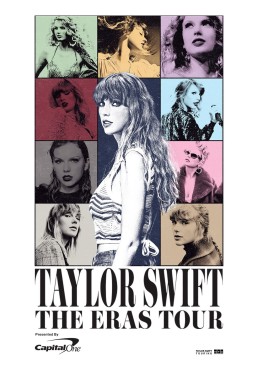
    Taylor Swift performed two concerts for her New Era tour around here this past weekend, on Friday and Saturday nights. Levi’s Stadium, where she was performing, can hold 70,000 fans and not only was it sold out both nights, but the resale value of extra tickets apparently reached $45,000 in last minute ticket sales. I can’t give a review of the concert— I wasn’t there, but I nonetheless have a lot to say about the way that the concert tucked itself into the ways of Silicon Valley one weekend. 

    Maybe I’m not a sympathetic person to be writing about this, maybe I am not a fan of anything that much, but I have a hard time understanding this level of commitment to an artist. I mean, most of the people at the event didn’t pay anything close to that amount of money. Perhaps they paid $500 or $600 and thought it was a worthy splurge to be part of this cultural moment. But at the moment that they later realized they could fund a year or so of college from the couple of tickets in their possession, that they could repair a roof or landscape the backyard, how they could weigh a couple of hours of fun against that and come out with the same calculus seems a little mysterious to me.

    Again, I’m maybe a curmudgeon about this, but taking public transportation with 69,998 of my best friends, being subsumed by noisy hordes of people, thinking of how if it took a few hours for everyone to file in (doors opened at 4:30, the concert started at 6:30), how in the world could they evacuate in the case of emergency? Not to mention parking, or concessions. Apparently, the open-to-the-public merchandising opened at 10am on Thursday morning, and people lined up beginning at midnight the night before to have the privilege to pay for (presumably overpriced) t-shirts that proclaim the dates of the New Eras Tour.

    My CrossFit coach says that there are only two kinds of people in the world: “Swifties — and Liars.” I have repeated this line often, but only to proudly proclaim myself, apparently, a liar. I have barely followed her brazen re-recording of her own songs, marveled at the $5 billion dollars she has generated for the economy, and found it slightly amusing that her fans in Seattle were whipped into such a frenzy that their movements registered at 2.8 on the Richter scale. That’s hardly a large earthquake, but it’s probably the first human generated one. 

    The local news is frenzied with one other small detail: she apparently violated the curfew of the stadium, which is at 11pm on weekend nights. This tour is supporting the release of four albums, and apparently her sets are very generous, lasting over three hours. I’m not sure if she thinks to herself “people have paid a week/month/year’s salary to come see me, I had best make it worth their while” or whether she just truly loves what she is doing and is bursting to share her music, or a combination of the two. The articles themselves point out the feebleness of the fine. The last time there was a violation, the 49’ers were fined $1,000 by the city.

    Part of the intention of this system of fines is, of course, to protect the public. It isn’t reasonable for neighbors to bear the brunt of the excited frenzy happening in private (and expensive) nearby quarters and it is a big traffic nightmare. Noise ordinances are meant to equitably distribute what is actually a scarce resource: quiet. 

    We know it’s a scarce resource because the nearer to the highway you live, the cheaper your house is. The couple of times I ended up on calls with my congresspeople, in that weird automatic they-call-you system so you can listen in on their calls with constituents, it was all about the flight path into the airport and how upset people were by hearing noisy airplanes when they previously hadn’t— at all hours!

    Given how once-in-a-lifetime this tour supposedly is, it’s hard to see how anyone would do anything other than brush off the fine. It could be as much as a calculated decision, and for the 70,000 fans in the audience, it’s hard to see how their preference to extract the maximum value out of their ticket could be weighed against the needs of the neighbors in this case. An economist would probably love this problem: how much did each of the fans pay per minute of the concert, and how much would they be willing to pay for extra minutes, against how much the residents would value an earlier curfew. There’s pretty much no price tag on the fine that is going to make it come out in favor of quiet over this extraordinary performance.

    Which is why I’m going to say one other thing about it, which is about a tour overall as a sort of anti-internet meme. It’s so…analog. 

    One of the curious things about the digital revolution is the way that everything has become simultaneous and instantaneous and altogether pulled out of time. It used to be that tv shows aired episodically, and you had to wait to see what would happen next. Now, seasons “drop” at midnight and by the time you get to the morning, someone has already binge-watched them all and you are behind. I have to tell my kids that there didn’t have to be spoiler warnings all the time before, because everyone had to wait just the same. 

    I can’t exactly claim that there is any pleasure of waiting, because it is frustrating. It is tension. But it is also excitement, particularly in the collectivity of it. This is a concert that was anticipated, that had to be waited for.

    For a while last year, one of my son’s TikTok feeds included a dog named Noodle, who was elderly and failing. This pug would be lifted up by his owner behind him, and sometimes he would then stand and look at the camera. Other times, he would sort of collapse into himself, apparently unable to even hold himself up. This, his owner would proclaim to be a “no bones” day as though there wasn’t a spine inside for the dog to hold himself up. And whether it was a “bones” or a “no bones” day was taken to be a kind of forecast— on a “no bones” day, the world might seem overwhelming, and you should be especially kind and gentle with yourself. 

    Eventually, the overwhelm was making this videos in the first place, and despite the viral demands of an audience wanting to know if the day contained bones or not, the owner had to pull back. And some time after that, the 14 year old Noodle died and there never would be any more bones.

    It struck me that more than the forecast, there was the rare pleasure of not being able to anticipate in advance. There was no way to get ahead of the game, no leaks or plot spoilers. No statistics or predictive AI. Only the fact that people were going to get in a room and not know what was going to happen, and nobody could find out any sooner.

    And it’s maybe a little reassuring that that still holds out a thrill, that the unexpected is still a pleasure, that curated spaces have their limits. And for all that can be said about how Spotify delivers up our music, how every song that Taylor Swift sang in her concert could be heard comfortably— in private, at our leisure, any time you want— there’s still something electric about not knowing exactly what will come next. That anything could happen. That live events can still offer something worth more than a year of college tuition. The wilds of curfews broken and set lists scrambled and an encore that you’re not sure will happen or not, until it does.

    And perhaps, the value of all of that is, as Mastercard once proclaimed: priceless.

  • On Israel: When Protests Fail

    On Israel: When Protests Fail

    I once read a story about two American expats living in Italy, who carpooled together to drive several hours down the Amalfi coast in order to properly cast their ballot for a United States election. (This whole set-up seems suspicious because why wouldn’t they just have mailed in their ballots?) Nonetheless, according to the story, they spent several hours and great effort to make sure their votes could be counted and registered, with the surprising caveat that they knew from the outset that they intended to vote on opposite sides of the election. Both of them knew going into the endeavor that their votes would effectively “cancel each other out” and yet they did it anyways. Why?

    Economists are puzzled by why people vote. In 2005, Freakonomics, co-authors Stephen Dubner and Steven Levitt penned a New York Times article about it, explaining that from a rational, self-interested point of view, it doesn’t make sense to vote. Among other things they point out, if the election isn’t close, one vote won’t matter in the slightest. And the closer the election is, the less likely it is that the matter will be resolved with the voters and more likely it will be resolved by other means. (Outside of high school popularity contests, any election resolved by a single vote will be referred to the judiciary, no?)

    But, the argument goes: taken to its logical conclusion then, nobody would vote, and that we know would be ineffective governance, so the conclusion must be wrong for an individual as well. This analysis must have gotten something wrong. I admit that economists aren’t particularly skilled at showing how decision making reverberates, and also true that mass movements seem to be particularly effective at creating social change. 

    Although today is a sad day to be writing about this. 

    Today, there was a crucial vote in the Israeli lawmaking body, the Knesset, that started to cut away at some of the safeguards of democracy. In particular, the legislative body made a law that the judiciary could no longer utilize a standard of “reasonableness” to invalidate the work of the Knesset. In other words, the legistlature has now legalized whatever illegal thing they might think to do. Instead of a legal body being charged with figuring out if a law is “reasonable” (the Israeli equivalent of “unconstitutional” because they don’t actually have a constitution), the Knesset can now call whatever they want the rightful “will of the people” or a “mandate” or some other such nonsense.

    It’s nonsense because the Israeli electorate is deeply split. Over the past several years, there have been successive elections which have swung slightly one way or another, and then the government coalitions have fallen apart under the stress of not quite having enough of a mandate. But in the latest election, the Israeli version of gerrymandering prevailed. (It’s not really gerrymandering because Israel does not have geographic regions, but it does have other rules about how to count votes, and parties that don’t get to a threshold have their votes discarded, and that’s what happened). And once the leading right-wing parties had enough of a block (including teaming up with avowed racists, misogynists, and lunatic nationalists), they moved aggressively and quickly to solidify their power. 

    That’s what power does, I guess. 

    In this case, all 64 (out of 120) members of the coalition voted to support the “reforms” despite 29 straight weeks of protests, wherein a large chunk of the Israeli population participated in rallies, strikes, shutdowns, marches, and other ways of making their voices not only heard meekly, but heard resoundingly. Sixty-four diaspora communities participated as well, hosting rallies in Athens, Philadelphia, Buenos Aires, and San Francisco, and others. 

    Maybe this ironically pushed the government to action sooner and more furiously. Maybe they knew that if they didn’t seize the moment, they weren’t going to get another chance. 

    One detail from this morning really struck me. At the beginning of these protests, half a year ago, the defense minister, Yoav Gallant (who was part of the government coalition) went to the Prime Minister, Netanyahu and warned him that the civil unrest was making Israel less secure. To be clear, this assessment was in his professional purview and it was practically his obligation to present this analysis. But in a case of “shooting the messenger,” he was fired for disloyalty. 

    The Israeli population roared to his defense. The next day found mid-week protests that were so loud and vehement that within a relatively short time frame, Gallant was hired back into his job, and the proposed judicial changes were paused temporarily.

    Today, as a reinstated member of the government coalition, Gallant voted for the reforms. You can’t tell me that he doesn’t know it was wrong, but he voted for it anyways. 

    That’s what power does, I guess. 

    If politicians were better and more honest interview subjects, economists should really spend the next couple of years figuring out why it is that elected politicians vote against their better judgment so often. In the United States, we like to explain it with political donations, but that isn’t relevant in Israel. And maybe I’d be suspicious of any explanation they came up with, but I sure would like to know why people who get elected to serve the people, who understand the costs and benefits of individual decisions, are so easily persuaded to vote against what would best serve their constituents. Job security? That also seems a little hollow. 

    At any rate, it’s a depressing day. If I’m skeptical about what a single vote does, there has always been refuge in the idea that many, many votes would make a difference where a single one couldn’t. And I still believe that, to some extent. This isn’t the final word, and even dictatorships have been toppled by vocal protests. I just was really hoping that peaceful, repeated, and committed protests in this case would help the train find its brakes. 

  • Trouble On the Farm

    Trouble On the Farm

    The President of Stanford University, Marc Tessier-Lavigne announced this week that he would step down from his post after the university’s board of trustees found data manipulations in academic papers he co-authored. This seems like a fairly wishy-washy kind of allegation, or at least less salacious than the kind of misconduct that usually makes it to the public sphere. There was no sexual assault, nothing deliberately covered-up, and in fact, it’s not clear that Tessier-Lavigne even precisely knew about what was going on.

    The most that people seem to be able to say about this is that he should have known, should have been on top of things, although even that is a little bit suspect, because the report itself says that Tessier-Lavigne “did not have any knowledge of any manipulation of research data.” According to their conclusions, he either “was not in a position where a reasonable scientist would be expected to have detected any such misconduct” or “was not reckless in failing to identify such manipulation prior to publication.” The heart of his crime is instead that he “failed to decisively and forthrightly correct mistakes in the scientific record.” 

    In other words, he was offered a chance to come clean, to explain his mistakes, and he didn’t take it. And so, we come to this:  in a July 19 statement, Tessier-Lavigne said, “Although the report clearly refutes the allegations of fraud and misconduct that were made against me, for the good of the university, I have made the decision to step down as president effective August 31.” 

    But even with all of that said, that isn’t what the beating pulse of the story is about. The exciting part of the story rests with the 18-year old student journalist who put the wheels in motion to “take down” the president of his university. Theo Baker, now a Stanford sophomore, won a prestigious Polk award for journalism for his investigation, which he began two weeks after joining the Stanford Daily, the undergraduate newspaper. (There is a great interview with him here.)

    In a world where it often feels like one person can do little more than be one pebble in an avalanche of protest, here is a story of a young kid who managed to topple the powers-that-be by digging deeper, following leads, and asking good questions. Now isn’t that a story of inspiration?

    And without taking anything at all away from that work, I am still going to find it a little bit curious that this is where the heart of the story is.

    The thing is, when Baker started looking into these papers, it was because there were rumors of just this kind of misconduct that had circulated much earlier. Baker wasn’t a journalist searching through thousands of pages of documents, wondering if something was going to turn up. He was following up on what was, more or less, common knowledge, an open secret of sorts.

    So let me say a few more things about why the resignation itself fails to be very exciting, at least for media coverage of the event. Tessier-Lavigne might or might not have known about the data manipulations, and maybe he should or shouldn’t have, but let’s at least stipulate that willful ignorance was very, very good for his career. His papers were in biotech, which is Stanford’s latest romance of a field (since it’s been several decades since computer science at Stanford helped launch Silicon Valley- or at least launch it into the stratosphere of wealth). And while the big biotech companies are a little bit north of Silicon Valley, the promises in terms of shifting human life are even more promising than they ever were for silicon chips. After all, not everyone needs a device (or three) in their hands, but everyone has DNA and biology. Choosing a biotechnology researcher as the president of Stanford was a powerful and purposeful choice for the university. Nobody’s incentive was to jeopardize this by looking too carefully at his past research. Certainly not Tessier-Lavigne’s own.

    One of the women in my CrossFit class is a graduate student in the sciences at Stanford. She is adamant. “He should have known,” she says, even though the report itself said this wasn’t where the fault lay. 

    But here’s what we both know: the system is set up to reward the most exotic, provocative research, whether or not the evidence lines up exceedingly well or only slightly uncomfortably. Because in the end, headlines are headlines, but p-values are only footnotes. Don’t know what p-values are? That’s a little bit my point. Data, which we like to think of as evidence in hard-form, turns out to be extremely subject to manipulation, and the way a researcher asks a question is going to hugely influence the answer you get. (Or in this case, where they draw their data from).

    But the incentives aren’t quite as malleable. The incentives line up behind the most provocative way that the data can be reported.

    Several decades ago, Stephen J. Dubner and Steven Levitt co-authored a book called Freakonomics, which offered a revolutionary-to-the-general-public way to think about human behavior influenced by incentives. The central idea is that you might predict how people would act depending on where the profit lies, not a matter of character or ethics. And I think this is the most useful way to think about this whole situation.

    Because here is my assessment, for whatever its worth: We continue to set up systems that incentivize a person to act one way, and then kindly ask them to act another way. Researchers with knock-out research get more reward than those who make careful, attentive and cautious conclusions. The person who fudges data— a little, maybe— maybe declaring some samples inconclusive and dropping them from the study, or who declares something else outside the norm— these are normal processes that researchers need to use discretion to do. But what to make of the fact that sometimes, the rewards for making one judgment call over another are hard to resist?

    I can hear the protests against this point of view now: we demand ethical behavior, some of those lines are drawn exceedingly clearly. I’m not going to suggest that we don’t demand it, or that his resignation isn’t a clear sign that we won’t stand for going along with it, or that researchers don’t know where the blurry lines are. Instead, I am going to suggest a deeper and more difficult truth: that ignoring the rules of ethics can be wildly rewarding. People who act against their self-interest need special, whistle-blower protections, and sometimes we have a difficult relationship figuring out if they’ve even done the right thing (Edward Snowden, anyone?). On the other hand, people who go along with bad plans seem to come out on top often enough.

    There’s a quote that I like quite a bit, often attributed to Upton Sinclair. He wrote, “it is difficult to get a man to understand something, when his salary depends upon his not understanding it!” Upton Sinclair was born in 1878, and it’s a little bit quaint that the biggest reward he could conceive of for deliberately not understanding rules of ethics or the details of the limits of research could be a salary. He probably couldn’t imagine that if you just “never thought of it,” you might also enjoy private jets (Clarence Thomas), serving as a University president (Tessier-Lavigne) or just making billions of dollars from your investors’ pockets while your technology catches up to your promises (Elizabeth Holmes).

    If you take care not to ask questions too deeply of the chief investigators of your labs, you too might be appointed the president of your university, while risking getting your hand slapped. We can require all the ethics classes in the world, but as long as we continue to reward people who don’t heed those lessons, it’s probably not going to budge behavior all that much.

    At least in this case, the greater reward goes to Theo Baker. Bravo, kid!

  • Repenting, Repairing, and the Legal System

    Repenting, Repairing, and the Legal System

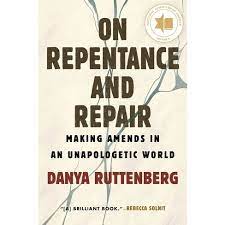
    “To put it bluntly, American society isn’t very good at doing the work of repentance or repair,” writes Danya Ruttenberg in her introduction to her book On Repentance and Repair: Making Amends in an Unapologetic World (3). And with that, she’s off to tackle an interesting hypothetical: what would it look like to do it better? She uses the framework of Maimonides, a 12th century Jewish philosopher, to discuss how true amends could be done. Contrary to popular intuition, this does not begin and end with an apology, but encompasses steps of naming the harm, change, restitution, and acceptance of consequences before even attempting to apologize. 

    Ruttenberg explores ever-larger spheres where repair work needs to be done. She begins with personal relationships, extends to harm in the public sphere (especially the internet) and builds outwards to institutions, and even nations, looking specifically at the case of the Truth and Reconciliation Commission (TRC) in South Africa and Germany’s reparations for the Holocaust. Eventually, Ruttenberg turns her attention to issues of forgiveness and atonement, explaining why those are actually separate (albeit related) topics.

    There’s all sorts of good stuff going on this book. There’s an amazing plethora of contemporary examples, which allows for plenty of intuition-building. A reader who takes in this book is going to march right out into the world with a more nuanced and grounded understanding of what it means to address harm, and that’s just going to make for a better world.

    As I read it, there were a couple of nuggets that suggested themselves as being worthy of even more consideration than the scope of the book. One of them lies in the account of South Africa’s Truth and Reconciliation Commission (TRC) at the end of apartheid. Apparently, (I didn’t know this before) they made the difficult decision to trade absolution for truth-telling. In other words, in order to encourage criminals to expansively “own” the crimes they committed, they promised not to prosecute in exchange for this publicized (televised) telling-on-oneself. You can probably see why this is controversial— it looks like countless opportunities to get away with murder. But it facilitated, as Ruttenberg puts it, “a kind of healing that might not have been possible had the TRC chosen more conventional models of punitive justice” (119). Victims were able to hear an account from the perpetrators which offered them the narrative that they were indeed harmed, and that it was wrong.

    Leaving aside the imperfections of that system, I think it’s worth putting this choice up against her next chapter that discusses the American justice system, and the tradeoffs between confessions and punishment. I’ve long thought about how our system of “justice” does not allow for forthright communication, even when that is all the victim — and sometimes the perpetrator— seem to desire. I remember once reading about a case of medical malpractice. The victim had suffered; more than anything, she wanted the doctor to acknowledge her pain and apologize. The doctor recognized his mistake; he wanted to explain what had happened, and express his regret for the profound way his error had impacted her life. But there were lawyers and insurance agents and hospitals involved — and their counsel and interests superseded those of both the victim and harm-er. Those interests insisted the doctor not make a statement, lest it implicate him or the hospital and leave them financially vulnerable. Ever more desperate for resolution, the victim sued— over and over— trying to force not a financial settlement but an apology.

    Reading this, the whole thing seemed tragic. It’s hard not to dislike lawyers and the legal system when it looks like if the whole lot of them would just clear out, two people could have sat in a room together and cried and the whole thing could have been just better enough that they could have gotten on with their lives. Instead, years were spent in misdirection, shame, isolation, and financial loss with some lawyers minimizing the harm for effect, and others exaggerating the harm for effect. Meanwhile, the harms kept compounding as resolution became ever more elusive. 

    I recently read a book on just this sort of frustration with the legal system, called Why the Law is So Perverse by legal scholar Leo Katz. One of the questions he considers seems particularly on point here. He asks, “Why does the Law Spurn Win-Win Transactions?” And then— he answers it. According to Katz, (and to simplify a bit), it’s not necessarily the case that the law doesn’t like win-win scenarios, but only that there are a lot of principles that the law holds dear, and putting win-win higher up means we have to give up on other principles that are also important. At some point, I’ll have to give full shrift to this argument itself, because it’s such a beautiful example of philosophy and theory meeting practical experience, and Katz renders the dilemmas with such accessible and intuitive examples, and the whole book is both elegant and provocative.  

    But I’ll just turn back to Ruttenberg’s book because she specifically mentions a win-win of amends that the law spurns in her world: restorative justice. The carceral system is horrifically bad at a lot of things— including, but not limited to, racial equity, rehabilitation, and making society safer. But Ruttenberg points out that it also stands in the way of actual repentance and repair. “The system as it stands now does not, apparently, want the repentance work of incarcerated or formerly incarcerated people… Critically, the system as it exists also doesn’t serve the needs of victims” (148).

    This seems ludicrous. Who is the system for then? I guess what I had heard before is that the punitive aspect of the carceral system is so important— Americans just want a kind of revenge for crimes, to make someone “pay”— that they are unwilling to let the system be more flexible, even if it would also be more effective. But maybe that isn’t it. After reading Katz’s book, I wonder if we can’t identify some other reasons— what is it that we’d be giving up (other than vengeance) if we adopted more win-win scenarios in criminal justice? 

    But of course, thinking through hypotheticals is different than the work at hand. Most of us don’t have criminal justice systems, lawyers, and threats standing in our way of genuine transformation and apology. What we do have is hard work. And I have to say: this book eases the way— not only by offering a roadmap, but inspiration. On the other side of our self-reckoning, there is more distance from the day that we were our worst selves, and the genuine freedom to do better in the world. If that isn’t inspiration to do good, I don’t know what else is.