Author: aradwin

  • The Old Man & The Pool: A review

    The Old Man & The Pool: A review

    For the past three nights, I have ended my day by watching a Netflix special by Mike Birbiglia called The Old Man and the Pool. It was recommended to me as an example of the way that a writer can weave together stories and call-backs, but I found that it was much more than that. It was extraordinary.

    I don’t watch a lot of stand-up comedy— I think the only time I paid to see a comic was when I went to see Jerry Seinfeld perform in Tel Aviv, and I can’t even tell apart my delight in his jokes from my deep and temporary lifting of my homesickness as he described tv dinners, rude walkers, and other quintessential Americana. Seinfeld is, of course, also a master at holding an audience captive, using wry observation, tight wording, physical drama, and gorgeous storytelling to spellbind a group. (It helps that people show up ready to feel light).

    But Birbiglia is no slouch either.

    Here’s what I want to say about Birbiglia’s piece: he takes us on a very dark journey. He starts with a body that might be ill, and takes us straight to the heart of the deepest fear, one that gets written in large letters on the sparse and versatile set in the background: I might die soon.

    He makes this deal with the audience, right away: I promise that this will be funny. I promise that every time I give you some horrible bit of news, I will take away the pain with laughter.

    Throughout the show, he tells of many people in his life who have died. The first person he discusses is his grandfather, who retired from a dangerous career, but still died when he was 56. Here’s Birbiglia’s words:

    “And then after that, he worked at a bodega in Bushwick.

    And supposedly one day, one of his regular customers came in and said, “How’s it going, Joe?”

    He just keeled over the counter and died.

    Which is sad.

    But it’s also a pretty funny response if you think about it.

    [crowd laughs]

    In some ways, he was the original comedian of the family. That’s an extraordinary level of commitment.”

    Birbiglia is a master of timing, so he lets us have that moment of sadness, a quiet moment, before turning it around for us. Right after he tells us that his grandfather has died, he tells us that it’s okay to laugh at the absurdity and irony of it.

    And he builds a lot of trust that way, to tell us that no matter how uncomfortable we are going to feel, how sad we might get, how profound the losses are, he is going to help us come out of it. It’s not going to be for long, and we are going to get to laugh.

    That’s pretty powerful stuff, and he puts it to good use. Not only do we deal with the grief of losing loved ones, but the fear of it, the things unsaid, and ultimately, the confrontation that we will all die as well.  That threat, the realization, hangs over the entire show, but he doesn’t let himself say it until the very last minute, when time is running out— as it does.

    Birbiglia teases this ultimate ending rather than say it outright. The light is a coffin. His nightlight goes out. He brings us to the brink and lets us laugh, and it’s exactly the awe of being adjacent to the Grand Canyon, the even grander abyss.

    But since I’ve seen it three times now, there’s another moment that I want to talk about, the moment that in a traditional narrative arc would be the climax. He is about to pull it all together for us, he has threads running everywhere that he’s about to yank on…

    And then he tells us that a man died last summer, from holding his breath underwater at the YMCA. That’s funny, right? In the hands of a comic, it’s pure gold. Mysterious, tragic…sure. But also, what a funny way to die. Kind-of like a grandfather who, committed to the craft of humor, keels over and dies on a counter.

    But Birbiglia doesn’t let us have the moment. He says that there must be a moment of silence to honor this tragedy. People laugh, because he must not be serious. But he seems to be serious— he scolds. He insists. 

    The moment drags on. The laughter comes intermittently, and it’s not because anything is funny. Actually, at this moment, nothing is funny. The content in front of us, that a man has died, has never been funny. And now, our comic, our interpreter, has told us that it isn’t funny. He has broken the rules which he set out, in which we were always allowed to laugh.

    Now the laughter comes because people are uncomfortable. The guide to humor-through-darkness has asked us to reconsider: is there anything funny about this at all? Birbiglia has good-naturedly enjoyed his own jokes with us all along, smiling along with our laughter, now finds nothing funny. He makes the audience repeat after him a solemn vow to have a moment of silence in honor of this unnamed victim of his own competitive breath-holding. It is all so tense, and uncomfortable. The audience repeats, slowly coming around to learning a new set of rules in which laughter doesn’t dissipate the uncomfortable truths. 

    And then. Then. Finally. He relents. He gives us our moment, he lets us laugh. We are back to how we were. 

    Birbiglia pulls the threads together, leaves us with just the right amount of wholeness, and takes his well-deserved bow to thunderous applause. It’s admiration and relief, in equal measure.

    He has checked all the boxes for humor, but he has done more. He has let us come inside his worries, his family, his fears, and his love. He has made it easy to take a sideways glance at the end of everything.

    The first time I watched it, I laughed at every joke. Each time I rewatched it, it seemed more and more dark, until he seem to have created a lightness out of darkness itself. Each tender story, an echo of the greater gaping void. It took me underwater and back out, and all I can say is that it is good to be alive.

  • Reviewer’s Corner: Save the Cat!

    Reviewer’s Corner: Save the Cat!

    “Save the Cat!” is a book, a method, and to its adherents, it is also a kind of faith proposition. It bills itself as “The Last Book on Screenwriting That You’ll Ever Need” but honestly, it might also be the first one that you’ll ever need. There’s no doubt that it is geared to screenwriters, especially those who are looking for commercial success. And yet, I can’t help but feel that it makes outstanding reading for novelists, playwrights, and moviegoers in general.

    What the book does so brilliantly is make a case for a universal structure that underlies the most compelling stories of the silver screen (as well as their more modern counterparts). There are 15 “beats” to a movie, Blake Snyder writes. And it’s not so much that he prescribes these 15 beats as he notices that they are present everywhere that there is good storytelling. He didn’t make the rule that stories have to be about a protagonist’s personal transformation. He simply noticed that an audience won’t feel complete unless it happens.

    The beat sheet, the 15 parts of a story, is a check to make sure that the story is rich and well-considered enough to compel the audience. Snyder gives examples of what happens when one or two beats are missing, and gives examples of how getting a couple of beats wrong makes the whole movie unsatisfying (or, in Snyder-speak, unsalable). 

    One of the challenges of craft books in general is that they can feel a little bit like manuals of what not to do, rather than helpful advice of how to do it better. For example, in his book Aspects of the Novel, E.M. Forster writes:

    “The king died and then the queen died” is a story. “The king died and then the queen died of grief” is a plot… “The queen died, no one knew why, until it was discovered that it was through grief at the death of the king.” This is a plot with a mystery in it, a form capable of high development.

    The point of this tidbit of advice is supposedly a helpful one, to remind writers that events in their stories need to be causally connected. Nobody likes a story in which too-convenient developments happen at just the right moment, as though plot points come through otherworldly intervention instead of the consequences of a character’s actions. At the same time, if you really get behind Forster’s advice, all it can do is point out what is missing. It can’t fill in for you the “why” and it can’t connect events plausibly. The advice reads more like “don’t not-connect events” rather than suggest a way that you could thread causality through your story.

    Save the Cat! promises not only the analysis of why your plot might not be working, but the fundamental rules of what is necessary for it to work. 

    Take, for example, his emphasis on the first and last images of the movie, which in Save the Cat! are supposed to be mirror images of each other. Now that I’ve read the book, I pay a lot of attention to these images, and it’s clear that almost the whole story of transformation can be told in the juxtaposition of these two images. You can read them like an arrow, pointing to what the protagonist needed to learn. 

    One of the films discussed in the book is Sandra Bullock’s movie Miss Congeniality, in which a female FBI agent who was always “one of the boys” goes undercover at a women’s beauty pageant to investigate a crime. The movie’s theme is about femininity, exploring the possibility of being both tough and a woman. The first opening image is a flashback of Sandra Bullock’s character as a young tomboy, beating up boys on the playground, and then there is a present-day scene of here as an FBI agent, still surrounded by men. The final image is the complete opposite: all gussied up, she is surrounded by women, and presented with an award by her fellow contestants. If you only knew about those two images, you would still know what the movie is about.

    Is this a formula? Sort of. It’s a check. And it works exceedingly well for the extremely visual medium of movies. After reading this book, I will always pay attention to the first image, what is being communicated to me by the director, and what I am to expect. 

    But I’m not interested in writing movies, and I love novels that would make poor adaptations to movies. Those would be (among other possibilities): novels whose central arc contains a developing awareness which is hard to show visually and requires a narrator’s interior awareness. Is the Save the Cat! Method still applicable?

    Let me cut to the chase: only if you want to write a compelling story. And then, decidedly yes.

    As humans who have heard countless stories, we have a deep and felt intuition about how they work. But we’re not always correct about this. If I had to repeat the story as I heard it, I might very well recount: the king died, and then the queen died. This book is an excellent reminder: be sure to get that “of grief” in there. It makes all the difference.

  • Love and Memory: A Cheat-Sheet on Remembering Birthdays and Anniversaries

    Love and Memory: A Cheat-Sheet on Remembering Birthdays and Anniversaries

    It’s been a scene in a hundred movies: a big important executive walks into their office. We know that they’re important because when they arrive, an assistant or secretary greets them. As they walks in a hurry,  s/he (but usually she) follows behind and tries to tell them about all of the meetings or decisions that await them, as though life could not continue and progress could not be made until their important arrival.

    Then, at the end of a stream of urgent information, she will mention something personal: it is soon to be their spouse’s birthday, or perhaps an anniversary— should she handle it?

    Because it’s the beginning of the movie, and the audience is meant to learn something about the marriage from this interlude, the big important executive tells the assistant to yes, please take care of it. The audience is meant to learn: this is a marriage in trouble, this big-important-executive has prioritized work over love. Offloading an expression of love is a sign of not-caring. By the end of the movie, (especially if it’s a certain kind of movie), we expect that we will see this big-important-executive making sacrifices “to take care of it” without the assistant’s help, in gestures that will be deeply meaningful and well-received.

    Dr. Gary Chapman made waves (and a fortune) a couple of decades ago, by detailing five distinct love languages in which humans give and receive love: words of affirmation, acts of service, receiving gifts, quality time, and physical touch. Taking the time to choose a gift and write a card touches upon an awful lot of them, which is what makes this a popular and evocative movie scene to set the romantic stage.

    But there’s an even more basic “love language” that didn’t make the list, and I wonder if it was just too basic to make the list. I might call it remembering things. The whole scene is triggered by the fact that the assistant has remembered a date, identified a need. More generally and beyond important dates, these could be things like what kind of dessert your partner likes, the vegetables they can’t stand, and core memories. I call it basic because perhaps it is fundamental: you can’t give a gift or spend quality time unless you can remember what kinds of things that your spouse likes. You can’t hit the mark on words of affirmation without remembering what is in a loved one’s day and where they might need it. And nothing is more lonely than having an important memory with a person that they can’t recall. 

    This morning, the Business Section of the New York Times ran an article entitled, “Honey, I Love You. Didn’t You See My Slack About It?” with a surprisingly tenuous connection to what might traditionally be called “business.” It was about how couples are using apps to manage their household tasks.

    The article profiles a man named Ben Lang used an app called Notion (which used to employ him) to manage grocery-lists and household tasks. While this was innocuous enough, he then burst beyond its intended use to add sections for keeping track also of more intimate things he wanted to remember in his marriage: things he and his wife agreed to value about each other, ways to connect, date-night memories and Meyers-Brigges results And when he offered to share this template with people,

    “The internet responded with a venomous outrage. “People have told me my wife is cheating on me, people have told me I have a dead body in my basement, people have told me I’m autistic,” he said.”

    First of all, these are curious things for people to claim knowledge of, on account of any app. (I’m being dispassionate here, but really— dead bodies in basements?) Second of all, it is peculiar for anyone to dismiss what works for another couple. Is someone who writes to a random stranger to diagnose him as autistic truly likely to have a more loving marriage than a person who shares what is working well in his? (Doubt it).

    But more, I’m struck by the idea that people have an instinctive distaste for letting technologies share in functions that feel like expressions of our unique humanity— like memory. If remembering things is foundational to any expression of love, what should we make of someone asking for help in this foundational skill? If that super-important-executive at the beginning of the movie gets pinged by a phone reminder and acts on it, where is the love? 

    To some extent, it’s true that we remember what’s important to us, or what we learn under strong waves of emotion, or what we devote energy to remembering. And in the early days of romantic engagement, when we’re flooded by endorphins and emotions, we don’t need reminders on our phones to tell us that we’re next going to see our partners at 7pm; our every minute of the day points toward that next moment with anticipatory longing.

    But if that really sounds like the recipe (and litmus test) for continued success in marriage, years later when there are chores and children and budgets and health issues, worries and tasks and losses, mortgages and crises, in-laws and career changes, room-parents and fundraisers and teacher appreciation weeks, then I say: feel free to keep doing what is working for you.

    As for me, I’m signing off now to comb X for the post where Ben Lang offered to share his template…

  • Enemy of the People: Excitement in NYC

    Enemy of the People: Excitement in NYC

    Which is better, to be right, or to be happy?

    I suppose that there are families where that isn’t the central question, but it was in mine, and really, it wasn’t so much a question as a conviction: to be right is to be happy. As an adult, when I say this out loud, it sounds ridiculous. And yet, I can’t quite get my sunken teeth out of the flesh of correctness.

    And in the midst of articulating the miserable way of being programmed to think that you will win friends by asserting hidden and uncomfortable truths, one day, a friend looked at me and asked, “Have you heard of the Ibsen play, ‘An Enemy of the People’?”

    Why no, no I hadn’t.

    Google to the rescue and— how had I missed this gem?

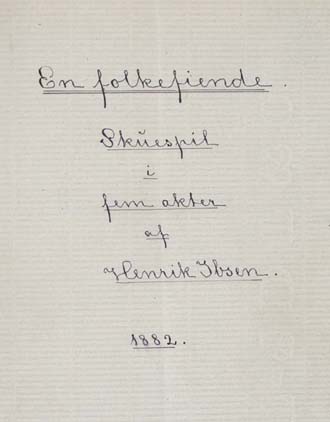
    This play was written by Norwegian playwright Henrik Ibsen in 1882. In Norwegian, the title is Folkefiende, (a delightful pseudo-cognate), and it’s been performed in various English translations on Broadway alone ten times, the most recent opening this past month.

    The play follows the story of Doctor Thomas Stockmann who discovers that bathhouses in his town, newly opened and celebrated for their healing powers, actually harbor bacteria and disease. A man of conviction, he is left alone to sound the alarm, warning the mayor (his brother) about the health threat, even at the risk of disrupting the town’s anticipated summer commerce. While at first it looks like the good doctor will find a sympathetic hearing among the powers-that-be, one by one they turn on him, preferring a self-deluded narrative that goes down easy rather than wrestling with the consequences of seeming alarmist.

    The tragedy of the play is that, of course, the doctor is right. He has to choose whether to stand by his convictions or whether to stand down and maintain every friendship and relationship he has, as well as soothe the worries and woes of his entire town.

    In art, we tend to love and root for people like the good Thomas Stockmann. Even in the historical rear-view mirror, we tend to like people like this. In real life, we despise them, just as the characters do in this play. And I honestly think that we know this, and that’s what makes it good and compelling art. In the audience, we see how right and righteous Dr. Stockmann is, and we have the illusion that if we had been in his town, we would have stood by him, even as we are being instructed: no, that’s not how the world works.

    And it is this tension, between the way we wish we could be, and the way that we humans truly are when it comes to catastrophic threats that was exploited in the recent staging of the play on Broadway, on opening night. 

    What happened on opening night? Sparks flew, the gauntlet was thrown, the play was disrupted.

    Here’s how theater critic Vinson Cunningham explained it in the New Yorker:

    At that moment of high drama, one environmental protestor in the audience after another got to their feet and began to fulminate about the climate. “I am very, very sorry to interrupt your night and this amazing performance!” one shouted. “The oceans are acidifying! The oceans are rising and will swallow this city and this entire theatre whole!” The protest action, with its references to science and to government inertia, and with its tightrope walking along the boundaries of free speech, perfectly matched the tone and content of the play.”

    The New York Times critic, Jesse Green, explains it thus:

    Their timing, just after a pause between acts that included a surprise pop-up activation onstage, was exquisite. As part of Gold’s concept, some members of the audience who were already milling about on the set remained to “attend” the town meeting that followed. Because the house lights were deliberately left on to emphasize that mix of cast and audience — as well as the interpenetration of past and present, fiction and reality — I was certain the protest that immediately ensued was part of the show.

    Certainly apt were the protesters’ costumes (statement T-shirts) and catchphrases (“No theater on a dead planet”).

    It’s no surprise anyone that Ibsen’s play would be the right location for a protest about climate. The entire conflict of the play is what it means to sound the warning alarm about imminent destruction, and the incredible forces which come into play in order to willfully look away from a threat in order to preserve the status quo, at least a little bit longer.

    To sound the warning alarm feels, always, like you will be thanked. To know the truth and to bring other people to the truth feels like a public service. To avert disaster.

    Here’s the thing about warning bells though. They are only that in retrospect. Trying to get other people alarmed about something you see is an actually crazy endeavor. 

    For every Ibsen’s Enemy of the People, there’s a Boy Who Cried Wolf. The abuse of alarmist messages, the fact that we can spot aberrations in data long before we know if it is building towards a trend or a passing aberration, means that we could be worried about things all the time.

    At least I could. My city wants me to do earthquake preparations. Also maybe flood preparations, and why doesn’t may family have a few days’ stockpile of food and water? The CDC is saying both reassuring and alarming things about the latest spotting of Bird Flu— is this the next pandemic that is probably going to happen in my lifetime? The rise of monoculture means that our food supply is more in jeopardy than most people realize. That rice shortage a few years ago was a warning shot across the bow if there ever was one. Democracy is failing. And of course, the oceans are rising and the planet is warming.

    It’s not unreasonable that Dr. Stockmann’s colleagues chose to put their heads in the sand. The unreasonable thing is that we in the audience entertain the idea that we would have done any differently.

    Of course, believing that we would have is precisely the enduring pleasure of An Enemy of the People. Dr. Stockmann’s obvious correctness convinces us, and it helps that we don’t stand to lose anything by believing him. It won’t be our town that plummets into poverty, bankrupted by closed bathhouses, after all.

    Still, if you would like to be disabused of that notion, in the interest of being right, you have only to think of those protestors disrupting the show. What happened, after all, to them? The critics don’t say, but we already know, don’t we? They were escorted out of the theater and the play went on, continuing its warning of what will happen if we don’t act in time.

  • Madonna Celebrations Tour in SF: this is a bust

    Madonna Celebrations Tour in SF: this is a bust

    Michael and I went to the Madonna Celebrations tour this past Tuesday night, which was held in the Chase Center Stadium in San Francisco. Apparently, this stadium is capable of holding 18,000 people. That’s a lot of people, and probably the largest crowd of people I’ve ever gathered with in any indoor space, ever. There’s something kind of unreal about that.

    But I’ll cut to the chase and say: it was, overall, a disappointing experience.

    Here’s something that is true about music: it has a nearly unbelievable ability to connect people— spiritually, politically, emotionally. Listening to some bits of music is like surgery ripping your heart out. Other bits of music summon you. I can’t think of much else that can bring you into your own memories, into tears, into the poignancy of feeling understood deeply, all within 60 seconds. A lot of visual art moves me, and then I think about it. But a lot of music doesn’t make me think, it makes me feel. 

    I read once that the music that hits you in your adolescence just sort of cements itself into your soul in a special way, that the novelty and your development together mean that there will always be a special place in your heart for this particular music.

    Madonna’s “True Blue” album found me at just that kind of vulnerable moment. La Isla Bonita was an anthem of imagining for me, what it means to fantasize and remember something at the same time, an evocative “and when the samba played, the sun would set so high” — a Spanish lullaby. That’s really the only album I know, so I wouldn’t exactly call myself a Madonna fan. On the other hand, Michael never shied from calling himself that, so he was happy to splurge $$ carry ourselves to San Francisco, and splurge on the time to indulge a concert that was set to begin at 8:30 pm.

    Of course, we knew it wouldn’t begin at 8:30. When we arrived, I asked the ticket taker if he knew anything about the timing, and he helpfully answered, “she’s saying that she’ll come on at 9:30, but it could be as late as 9:45.” 

    I don’t want to seem like a grumpy old lady, but why not print the time it actually will begin? If Madonna wants to perform at 9:30, no problem, but why not just say that? For what reason did I need to spend an hour buying things or sitting down and waiting?

    Actual start time: 10:00 pm. So more like 90 minutes, and by the time it started, I would have been satisfied for it to end.

    Maybe this is exciting, I don’t know. I’m old, and so was the rest of the audience. People who love Madonna over her 40-year career are old, and old people don’t love staying up late the way their younger selves once did. Why not respect your audience?Madonna is groundbreaking in her acknowledgment of rights of people who don’t always get full shrift: women, sexual women, gay and trans people, atheists— how is it not more widely understood that time is an equity issue, and that people at different life stages don’t all move to the same daily rhythm? 

    Well, if I want to start by saying that the concert didn’t understand its audience very well, maybe it didn’t understand very well what Madonna was either.

    The heart of a concert, and the reason that people pay a lot of money, is (I think) to draw close to their beloved performer. It’s why people pay more to be inches closer, and it’s why everyone at every distance values being in the same room. A live performance offers a glimpse behind the production value. It’s the thrill of watching how the performer responds in unscripted ways, the pauses, the things that won’t be edited out.

    We were sitting up pretty far away from the action, and Michael worried that we’d be too far away to see well.

    “Don’t worry,” I said. “There will be big screens. The only point of being closer is to see if you can sort of match up the little dot with the action on the screen.” We’d still be in the room to see what happened. We’d be close.

    But this was a concert without closeness. There weren’t just screens, there were highly produced screens that split the difference between watching a music video and watching a concert. Every song was its own universe of production value. There were elevator-like things where Madonna performed from overhead, there were rotating prisons on the stage, there were massive sets that changed every song, there were platforms and videos and up-close shots and an entire live cabinet at the back of the stage that looked like a war room.

    We were inside of a music video, and one blaring at over 100 decibels, which for the record is a good 10,000 times louder than our dinner table, which is very very loud. 

    But I didn’t experience any of this as exciting, or enhancing to my experience of seeing Madonna. I felt like it was all additional insulation, putting cheap thrills in between me and the performer. There was no Madonna to be had at this concert, there was only the image of her, developed, rehearsed, cultivated, and projected onto a screen.

    Was I alone in this assessment?

    Let me offer this in partial support: several times, various other people- and even Madonna herself — would gesture their arms, asking the audience to clap in the rhythms, asking the 18,000 people there to come together and make a noise, together, to come together, to be part of the event.

    The response was lackluster. 

    Here’s what I think:

    I think that nobody likes to be cast in a music video. The high production value distracted the audience from the performer. Oddly, I felt like she was more intimately singing to me on her old albums than she was there, right in front of me. She was starring in a Madonna show, but she was not performing for us so much as she was staging an event. I didn’t want more songs, I wanted more Madonna.

    There were some parts of the show that were undeniably interesting. At the beginning of what the Wikipedia set list calls “Act III,” she opened with Like A Prayer, and the staging was a very intriguing performance art piece. There was like a rotating carousel on stage, with dozens of framed windows spinning around, and in each one a shirtless male dancer. In sync, they performed a kind of crucifixion, with gymnastic moves that evoked the torture and sinuous romance of Jesus on the Cross. It was mesmerizing, interesting, a beautiful ballet. Meanwhile, Madonna was hooded by three black-robed priests swinging incense, led along the stage, headed….somewhere.

    It was too frenetic to take in all of the imagery, but it occurred to me that Madonna has always done very interesting things in the space of religion, spirituality, Catholicism and married it to deep sensuality and sexuality. There’s a lot to be said about what she did, and I felt like I was in a moving modern art piece that I couldn’t fully absorb. At the same time, it’s only by referencing the wikipedia article that I could even remember what song was playing at the time. (There were so many recorded backup vocals— am I right or wrong to be suspicious that a good chunk of this concert was actually blaring pre-recorded and not live music?)

    But shortly after that was my favorite, and perhaps only good part of the show. 

    The moment, the song, doesn’t appear on the set list, so it at least appeared to be added in for just this night. I won’t say it was unplanned, but it was un-enhanced.

    Madonna took a moment where it was just her on the stage. No pyrotechnics around her. There was just her, and the cameraman in front of her, putting her visage in front of us. With a microphone loud enough to be heard in the heavens, she pleaded for “these difficult times, when innocent children were being killed.” I looked over at Michael because despite the fact that violence threatens children all around the world, it’s political now, and I was afraid for a moment, him wearing his kippah. And she said, “and kidnapped,” and I realized: it’s impossible to say anything now that can just read as wanting the violence to stop, and she was trying.

    She said something like, “you all know,” and then frustrated said “I’m not the news!”  She wanted to be saying: this is hard, people. Our world is broken. And then she sang her truth, all slow-like, “express yourself” and I felt like she was saying: you can only do what you can do, but you should do that. And that’s why I felt she was, finally, singing to us: using her voice, her instrument, to bridge the gap between us, between all of us.

    She said, “you all have phones, take them out,” and like lightning bugs popping out of mid-air on a summer evening, everyone pulled out these amazing machines in our pockets. I stopped looking at the stage, looking at the screen, and looked around in awe at the thousands of people around me. Little flashlights, lit up together, and it really was chilling to see thousands of little lights go on.

    I felt part of something, part of this call to be bigger and better, and I think that’s what she really wanted to say all along. And I wish she could just be comfortable, as a 65-year-old woman, to say, “I’ve had this big career and I’ve done stuff, and also, I’m not Taylor Swift, and you all might have paid big money for these tickets, but still, I am who I am.” But it didn’t last, and after that moment, the highly stage pyrotechnics came back, even though the clock had rolled over and it was a new day, and one in which I would have rather been sleeping. We left right after that, streaming out with plenty of other people who had passed their bedtimes, their tolerance, or their preferred decibel levels.

    And it made me feel a little bit sad because many years ago, I went to a Paul Simon concert where he was a speck and I watched him on the big screen behind him, but he mostly did hold a guitar and talk and sing to us, and I went home happy.

    Was that because it was twenty years ago and you could still do that? Or is it because he’s a man and he doesn’t have to be sexy to sing?

    I don’t need to watch an old lady look like a sex symbol and fake masturbate on stage and it’s not because she’s old that I don’t want to; it’s because it didn’t feel honest.

    Maybe I’m just too grumpy; maybe I’m too old. I was tired, I don’t want to be up at midnight and waving my arms. Or maybe if the crowd had grown frenzied I would have too. Or maybe if we’d paid even more we could have been amidst the true fans and we might have gotten swept away, or maybe the stage exploding in fire would have been more thrilling if we could have been close enough to feel the heat.

    But I don’t think so. I think you can only feel it if the performer really brings herself. I think she knew she wasn’t doing that, maybe she thought she had to do this, or maybe she wanted to. Maybe she didn’t want to do the concert at all, and she was as begrudging a participant as I was. Or maybe her moment has passed, a star gone out and we’re just watching the old light still making its way over to earth. Who knows.

    What I do know is that if she came to town, and you blinked, and you missed it, don’t worry— really, you missed nothing at all.

  • The Atlantic takes on Tech Titans?

    The Atlantic takes on Tech Titans?

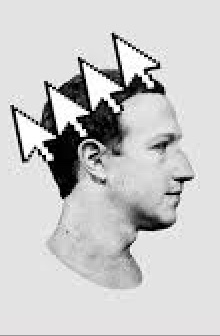
    The recent issue of The Atlantic offers an “opening argument” by executive editor Adrienne LaFrance entitled “The Despots of Silicon Valley.” In a move worthy of Mary Shelley, LaFrance creates a villain out of: the 20-year-old text messages of Mark Zuckerberg, a manifesto written by Marc Andreesen, as well as some vague hand-waving towards Elon Musk. In this mashup, individual actors become “these people” and he calls them “hypocritical, greedy, and status-obsessed” (12).

    Let’s been generous for a moment. LaFrance is trying to point out that there are a few private technology companies based in Silicon Valley which hold inordinate sway over our country’s politics—  and possibly well-being. Enough cannot be written about the effect of social media on the teen mental health crisis, neither is there a large populace of healthy happy adults running about this country while on their phones. But LaFrance doesn’t say much about that. As the ills which stand in for the rest, she cites: a Facebook study in 2012 in which they experimented with manipulating user emotions, its “participation in inciting genocide in Myanmar in 2017” and its “use as a clubhouse for planning and executing the January 6, 2021, insurrection.”

    At the top of this demonstration of big tech’s evils, she puts up leaders who “worship at the altar of mega-scale” and believe in their mission. The word “worship” is telling here; elsewhere LaFrance gestures towards almost religious views: “They tend to hold eccentric beliefs” (12)  and “This position, if viewed uncynically, makes sense only as a religious conviction” (14) and gestures at “what might be considered the Apostles’ Creed” (14).

    (If these impute some religious position to these tech titans, it only suggests to me the extent to which LaFrance herself could be understood here as a preacher, determined to take down the devil.) 

    Personally, I don’t think it’s necessary to impute any bad motives; why not assume that the technologists are interested in what innovative, adventurous, and inquisitive artists and scientists have always been interested in: how far can we push this thing?

    Here’s a story I learned recently about that impulse. When the people of Florence, Italy, outgrew their previous cathedral, work commenced on a new one, in 1296.  But the structure was larger than any building ever built before. Meanwhile, Florence had outlawed the use of buttresses— an architectural technique that offered support for a roof, but was considered gauche and ugly. That meant that  nobody knew how to put a roof on the building— the technology literally had not been invented. It took over 100 years before Fillipo Brunelleschi was able to solve the technical problems, invent a new way to put up a roof, and complete the building around 1436. 

    It’s kind of amazing that nobody said, at the very beginning, “hey, maybe we shouldn’t start work on a building with no idea of how it’ll work out to complete it.” But then, perhaps we would not have the Duomo di Firenzi, the enormous Florence Cathedral. Pushing boundaries was the work of architecture in the Renaissance. It’s always the work of innovators and artists to push the boundaries. Nowadays, the open frontier is information technology. (And CRiSPR/Cas9 but that’s not yet at the level of moral hysteria although it arguably should be). 

    To assume that inventors should only be allowed to play in the playgrounds of what has already been established and deemed safe is exactly the idea that Andreesen is shaking off, but LaFrance misses the romance and takes it to be a kind of political self-aggrandizement. 

    Here are two telling paragraphs from the article:

    “Our enemy,” Andreessen writes, is “the know-it-all credentialed expert worldview, indulging in abstract theories, luxury beliefs, social engineering, disconnected from he real world, delusional, unelected, and unaccountable— playing God with everyone else’s lives, with total insulation from the consequences.”

    The irony is that this description very closely fits Andreessen and other Silicon Valley elites. The world that they have brought into being over the past two decades is unquestionably a world of reckless social engineering, without consequence for its architects, who foist their own abstract theories and luxury beliefs on all of us.

    The fact that LaFrance finds in Andreessen’s words an inadvertent self-description only shows to me how poorly she misunderstands what Andreessen is talking about. I suspect that Andreessen has in mind when he writes all of that is someone like LaFrance herself. At the end of his article, LaFrance writes, “it has become clear that regulation is needed,” “Much should be done”, “Universities should reclaim,” “Individuals will have to lead the way,” and “That should include challenging existing norms.” That’s a lot of prescription-writing. Might not this be the kind of “know-it-all credentialed expert worldview” that Andreessen is writing about? The kind of pontificating without consequences? A person, unelected and unaccountable, but telling people what they ought to do, in a sort of abstract theory?

    If LaFrance is the sort of person that Andreessen has in mind when he writes this, we might think of it a little bit like a child’s temper tantrum; a little kid told that he has to get off the playground just as he has discovered the great fun of sliding down the slide backwards. It’s not that LaFrance (or we all) don’t foresee the great catastrophe that might result from such reckless behavior. But how does it help to misunderstand what Andreessen is saying, misconstruing the fun and adventure that he is after?

    In his manifesto (which LaFrance quotes at some length) Andreessen cites his desire for all of the fun of breaking boundaries. Probably just his first sentence will suffice:

    “We believe we should place intelligence and energy in a positive feedback loop, and drive them both to infinity…”

    What does this mean, really? Intelligence and energy are positive intentions, and the combo gestures at the idea that nobody should be allowed to put the brakes on someone else’s passionate inquiry. We have speed limits on public roads, but we make space for people who love cars to boast that it can go “0 to 60” in however-many seconds, and also for people who would like to boast that their car “maxes out at two-hundred-whatever mph.” 

    How do they know that? I used to wonder as a child. As far as I knew, there were no roads where you could find that out. And also: why do you care how fast your car can go if you can never drive it that fast? 

    But here’s the thing: we understand that some people have that love in their hearts, and we don’t put artificial caps on cars that make them start braking at the speed limit. And we don’t really have to. It turns out that people maxing out their car speeds is a negligible contributor to car accidents; we get a lot further by letting people keep all of their liberties of the glee of imagining (experiencing?) their fast car, and focusing our efforts on stopping drunk driving, where we don’t allow people liberty.  

    The people who have a fire in their belly, a gleam in their eye, a desire in their heart that wants to build the biggest domed roof that has ever been built, or make the world’s largest network, or make the fastest car— these are innovators we can’t live without. Figuring out how to make safe, speed-regulated streets for the rest of us is the trick. But it really doesn’t get us very far to demonize those who dream big, whatever their motivations.

    And for the record, I might have been more sympathetic to all of LaFrance’s arguments if she hadn’t really crossed a line in mischaracterizing where I live. She can make teenage-Zuckerberg a jerk (I find this uncompelling— hyperbole is a characteristic of adolescents, not an indicator of sober adult moral decay), and she can make Andreessen out to be a wannabe fascist, but how does that speak to the rest of Silicon Valley?

    To assume that these few tech titans speak for all of us, by virtue of living here, or their place of employment? Good lord, LaFrance. 

    She writes this: “Key figures in Silicon Valley, including Musk, have clearly warmed to illiberal ideas in recent years. In 2020, Donald Trump’s vote share in Silicon Valley was 23 percent— small, but higher than the 20 percent he received in 2016.” 

    How did this insinuation get past the editors at The Atlantic? Is it because LaFrance is the executive editor, got personally invested, and overruled good common sense? The evidence that “key figures” have “warmed to illiberal ideas” is that Trump’s percentage of the vote went up three points between 2016 and 2020? Can you even think of any worse evidence?

    I don’t even know what “Silicon Valley” she’s talking about, or how she got her numbers, but I’ll share what it’s like from my perspective: almost everyone I know supported Biden in 2020 in the general election. The Trump voters I know have nothing to do with the tech sector; one of them is a small business owner, another a neighbor. They both take as a principle of truth that the government is corrupt and think the best thing they can do is take Trump up on his offer to “drain the swamp.” 

    I know that my anecdotal data is hardly any better than LaFrance’s allegation, suppositions based on not-much. But at least I haven’t made two people’s ideas speak for the many, exemplify a trend, capture something about this place and a kind of runaway power grab. California in general, and Silicon Valley, remains almost unforgivably liberal, and neither Andreessen nor LaFrance speaks for me, nor for the thousands of people from around the world who move to Silicon Valley to improve the action of push-buttons or shipping notifications, or ad targeting, or other small projects from home offices, never so much as catching a glimpse of reclusive tech titans on their private jets.

    And if LaFrance wants to suggest a proto-fascism implicit in the dreams of innovators and artists, she ought to cite something more than Trump’s poor showing in a county that (electorally) rejected him summarily.

    The leaders of these companies don’t need to be despots (or demons) in order for us all to summon our collective will to make healthier, happier, and more secure online spaces.

  • Telling Forbidden Stories: The Life of Arno Mayer

    Telling Forbidden Stories: The Life of Arno Mayer

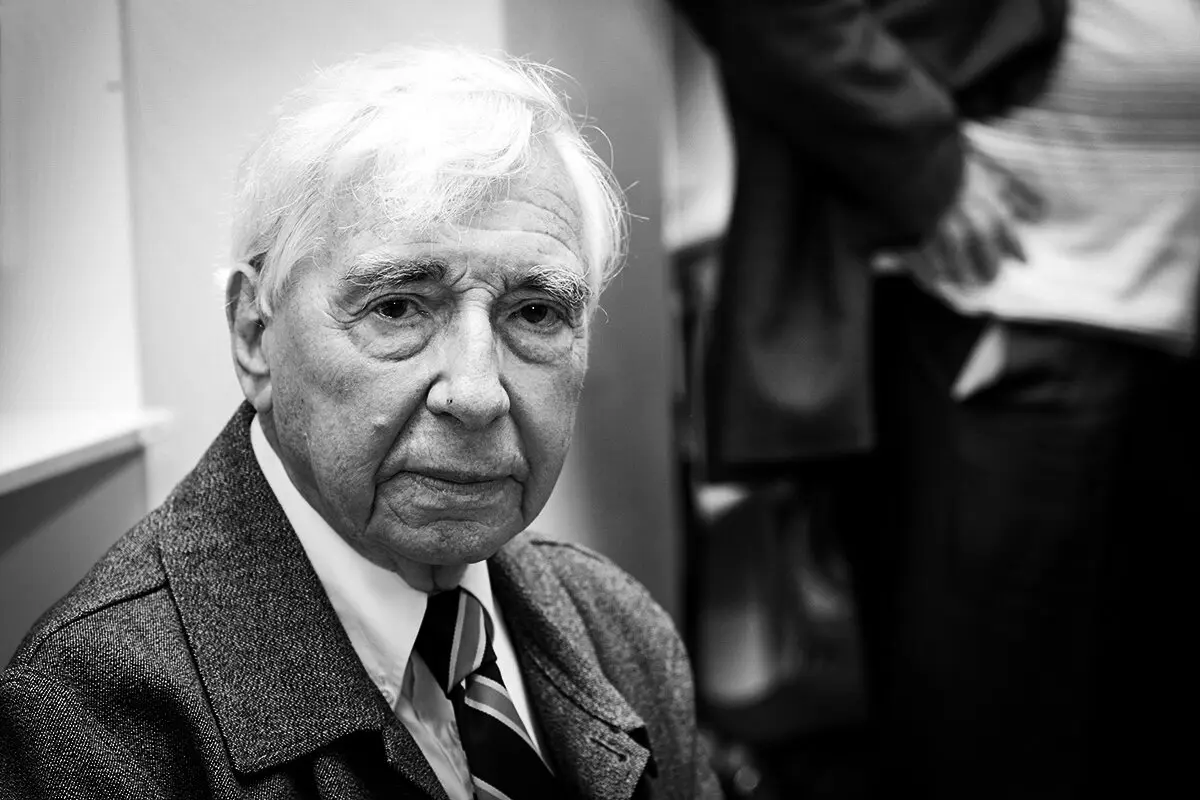
    This morning, the New York Times published the obituary of Arno Mayer, an historian of 20th century Europe, who died last month at age 97. Before I read the article, I hadn’t heard of him. Now I am glad to know about his life and work, even as I am a bit perplexed by some of the controversy he engendered.

    There are institutions in this country which design themselves specifically to protect free speech, and the University (as an institution) is one of them. The system of tenure was designed to ensure that professors could research, write, and speak freely about the consequences of their research without fearing that they would be dismissed for their political views. So it’s always especially distressing to see that while the formal mechanisms (keeping a job) work one way, there are countless other ways to discipline someone who holds views that threaten the collective narrative we’re wedded to.

    Arno Mayer was a person who didn’t accept quietly some of the big stories about history, especially when his research and ideas led him in another direction.

    It’s going to sound a little modest to explain this— like a big “what’s the big deal”— but Mayer was persuaded by a heresy that the rise of Hitler’s final solution was not fueled by Jew-hatred alone.  I know, I know— crazy, right? That there could have been factors other than hatred that influenced leaders and plummeted the world into war? Like self-interest and personal experiences and mistakes and national pride and modernity?

    I’m probably the wrong person to write about this, because I was pretty old before I knew that the “World War II” that people were talking about was anything more than the Holocaust. As a kid, I thought countries were just fighting over Jews, and the fact that there were other geopolitical considerations was news to me eventually. In Mayer’s research and writing, Mayer came to believe that it was a worthy project to lay out all of the factors that gave rise to Hitler’s “final solution” to kill all the Jews.

    You’d think— at least I’d think— that this would be a welcome addition to scholarship, to try to understand the way that systems (and people) in power develop into genocidal aspirants. If things start out as some sort of bias, and bloom into a desire to decimate an entire people, I’d sure like to understand the power dynamics and progression.

    But that isn’t what happened, and here I’m going to quote at some length from the New York Times obituary.

    Dr. Mayer argued that while antisemitism was rife within German society, it was only one of many reasons for the Nazis’ rise to power and subsequent invasion of the Soviet Union. Just as important was the specter of Soviet Communism, which drove the old German elite to support Hitler in the first place.

    “If Hitler’s worldview had an epicenter,” he wrote, “it was his deep-seated animosity toward contemporary civilization, and not his hatred for Jews, which was grafted onto it.”

    While the Nazis had imprisoned and murdered countless Jews already, Dr. Mayer argued, it was only when the invasion of the Soviet Union faltered, in late 1941, that Hitler and his circle decided on a systematic plan of extermination, which Dr. Mayer called the Judeocide.

    While several prominent historians supported Dr. Mayer’s thesis — the Polish Jewish historian Nechama Tec called the book “a welcome addition to the existing literature” — many others denounced it. In a lengthy review in The New Republic, Daniel Jonah Goldhagen, then a graduate student at Harvard, called it “a mockery of memory and history.”

    The Anti-Defamation League went further, adding Dr. Mayer to its list of “Hitler’s Apologists” in a 1993 report, accusing him of writing “historical scholarship which relativizes the genocide of the Jews.”

    The Anti-Defamation League was founded in 1910, and has been the leading American voice against anti-Semitism for over a hundred years. Now they list their mission as “To stop the defamation of the Jewish people and to secure justice and fair treatment to all” with the dual goals of fighting anti-Semitism and protecting civil rights. 

    So why are they wedded to the idea that the idea of hating Jews had to be the driving force behind Hitler’s rise to power? If I’m cynical for a second, I’d say that perhaps if your mission is to fight an enemy (like anti-Semitism), it matters a lot that the enemy you are fighting be a natural enemy. Not a choice that could be persuaded or shifted, but just something that people are born with. Maybe it’s more fundamental that way. 

    Actually, I don’t know. 

    Because it’s weird. Mayer was a Jew (interestingly, he calls himself a “non-Jewish Jew” in the introduction to his book  Plowshares into Swords: From Zionism to Israel). He fled the Nazis from his native Luxembourg, escaping by piling into a two-door Chevrolet with his family and fleeing south through France within hours of the German invasion, then onwards to Algeria, Morocco, then the United States. Four years after being forced out of his home, he enlisted and served with United States forces in WWII. And after the war he became a scholar of history, inspired by his own personal trauma of having barely survived the Holocaust. His father was a left-wing Zionist, and Mayer shared some of those sensibilities (although he grew disillusioned enough to criticize the way the country had embraced a  militarized nationalism).

    Here’s a little episode that Mayer himself wrote about in explaining his own Jewish background:

    It was with this background, in 1944, that I faced up to anti-Judaism during basic training in Company A of the Second Armored Replacement Battalion in Fort Knox, Kentucky. Early one evening after maneuvers, just after I had finished my assigned reading of the army’s daily news bulletin to the men in my barracks, a fellow soldier rushed forward and handed me a poem to recite. Its closing strain ran, more or less: “Once we have defeated the Krauts and the Maps overseas we’ll come home to kick the shit out to he Kikes and Niggers.” When I brazenly proclaimed my Jewishness they jumped me, and in the melee that followed I lost two front teeth.

    From the preface of Plowshares into Swords: From Zionism to Israel

    He goes on to detail disobeying orders to boost the morale (and court) the German rocket scientist Wernher von Braun.

    In any event, it’s a little strange to call this guy a “Hitler apologist,” don’t you think? I do.

    But here’s what is true: sometimes it seems that you can’t so much as analyze anti-Semitism without being called an anti-Semite. All the words of love of allegiance for Judaism don’t measure up to a skepticism with the dogma that there is just something unexplainable and unavoidable about the way that the world hates Jews. Trying to make sense of it gets you in trouble for offering “context” when there can be no explanation.

    So I’m going to offer this as a bit of a conviction: Complexity is not to be feared. Nor analysis, context, reconsideration, any of it. We don’t lose the ability to morally condemn just because we have come to a more nuanced explanation.

    I think people have in mind here a kind of sentencing trial, where a history of trauma or abuse or lack of opportunity is weighed against punishment. We judge Jean Valjean very differently than we judge Bonnie and Clyde, because the context of one is desperation and hunger and the other is psychopathy. Maybe the fear is that if we understand the mindset of anti-Semitism, and what nurtures it forward, we would just let people off the hook and root for their successes the way we want Valjean to triumph.

    But it isn’t true. Understanding better why people choose to embrace hatred is going to make our world better. And not only because we have more ways to fight hatred, although that is also true.

    Rather, it will make our world better because it is what the world needs. When you think about it, what is more likely to be lacking in the world: Nuance, research, and truth? Or people standing up to take an easy punch and criticize Hitler apologists? 

    I’m going to say the former. Particularly when those so-called “Hitler apologists” are anything but. 

  • Pauline Kael: Making Movies Better

    Pauline Kael: Making Movies Better

    I first came across a profile of Pauline Kael in Michelle Dee’s book, Sharp: the Women Who Made An Art of Having An Opinion. (Ten women are profiled in the book: Dorothy Parker, Rebecca West, Hannah Arendt, Mary McCarthy, Susan Sontag, Pauline Kael, Joan Didion, Nora Ephron, Renata Adler, and Janet Malcolm). 

    I didn’t read all of the profiles, but I did read about Pauline Kael because at the time, I had just seen Citizen Kane for the first time and learned that Kael had made waves writing an introduction to the script in 1971. Thirty years earlier, the writers Herman Mankiewicz and Orson Welles were co-listed as the screenwriters of the film and together won the Academy Award for Best Original Screenplay, and deservedly. But Kael went digging into the process and conducted research which led her to believe that Mankiewicz was the primary screenwriter for the film. In addition to noting his characteristic writerly style, she substantiated her claim with evidence of his close relationship to William Randolph Hearst, upon whom large parts of the film were based.

    Although afterwards, she protested plenty that she loved Orson Welles as a director as an actor, she felt that honesty dictated that she parse out the percentages of the writing contribution 30 years after its release. Amazingly, she spent 50,000 words doing just that. (The Great Gatsby is a mere 47,094 and in that space, Fitzgerald created an entire world). 

    The film world responded dramatically, and the episode is a good introduction to Pauline Kael: fierce critic, independent journalist, and completely immune to the consequences of her own actions.

    Recently, I watched a documentary about her, What She Said: The Art of Pauline Kael. Directed by Rob Garver, and released in 2018, the film follows the major arc of Kael’s life.

    Several of her reviews are almost canonical. In addition to reviving the brouhaha over Citizen Kane, she famously panned Star Wars (“for young audiences ‘Star Wars’ is like getting a box of Cracker Jack which is all prizes”) and praised Bonnie and Clyde, rescuing it from a fate of failure, which is where it seemed destined to go a few months after its release, audiences appalled by the romanticization of violence. Her review resurrected interest and launched it to its still-vaunted place in the canon of American movies. (“Instead of the movie spoof, which tells the audience that it doesn’t need to feel or care, that it’s all just in fun, that “we were only kidding,” “Bonnie and Clyde” disrupts us with “And you thought we were only kidding.”). You can read more of her most famous reviews in a 2019 New Yorker article on what would have been her 100th  birthday.

    What She Says is, in many ways, a celebration of American film as much as it is a biography of Kael; as the film narrates her life and story, clips of some of the most celebrated American movies play in the background. It’s a delight for the senses, a romp of familiarity through a world of cinema and cinematography. I’m not quick enough to catch most of the references, and they’re rarely tied to the discussion of Kael, but it made the movie feel snappy and fun.

    Which is good because Pauline Kael was, for the most part, snappy but not very fun. In fact, if the filmmaker had liked her a little less, it probably would have been easy to portray her as quite a distasteful person. If there’s one word I might pick for her, it might be uncompromising. Throughout the film, she had plenty of sharp words directed towards film critics who saw their roles as promoters, or who were swayed by the desires of directors, magazine editors, or advertisers, and she is undoubtedly right to hold that skepticism. Or, as she puts it, “Without critics you have nothing but advertisers.”

    But she paid a personal price for that conviction; among other things, she had trouble holding onto a job. And while the film didn’t focus on her personal life, the facts of her biography do include several failed relationships and marriages. The only hint of this in the film is when she says, “I think its very difficult for a woman particularly to go out with a man that she disagrees with sharply in matters of taste; because it really does offend all his macho sense.” I really hope she wasn’t right about that; even if we took away her pointed comment about gender, it seems a matter of despair that one should have to marry a person with similar aesthetics. 

    Not that she would have taken away the comment about gender. She wrote, 

    In the arts, women are accepted. They’ve always been accepted in the theater. But criticism, since it involves analytic intelligence and rationale use of one’s intellect, that hits exactly where men have always wanted to believe that women were less gifted. Its one thing to show sensitivity and talent; I mean, men like that in women. But, it is very, very difficult for men to accept the idea that women can argue reasonably.

    But really, I wanted to wonder: did she argue reasonably? 

    Although she took seriously her charge to share her impressions about the art she saw on the screen, she also wrote to entertain, to enter a conversation with movie-goers. More than once, reading her prose felt like maybe she wasn’t being so reasonable. And later in her career, she almost imagined that she was steering the course of movie production and of movie reviewing, mentoring her favored acolytes and discouraging those she didn’t feel worthy. Is that reasonable?

    When people disagreed with her, she had a great talent for not taking things personally. She could stand by her convictions like few others, and could write her own opinion without regard to others. She practically exemplified that old adage, “All the darkness in the world does not extinguish the light of a single candle.” She was going to burn her little light bright, and sometimes it seemed ike all the darkness only served to reinforce her convictions. 

    On the other hand, what she didn’t take personally, she did take genderly. If that were actually a word, it would mean that a decent amount of the criticism that was, perhaps truly, directed at Kael, she instead took to be an attack on her gender. It is as though when a critic wrote that she was gratuitously mean, she would rise to the defense of womankind, insisting that this attack came only because of her biology, and that men are allowed to be perfectly mean. 

    She was a true believer in criticism, in the possibility that artistic impressions meant something, and could help movies become better. Her great success was to turn film criticism into an art form in its own right. People who had previously read reviews to help them decide whether to see a movie, now found entertainment and pleasure in the refraction of a movie in the eyes of a smart critic. 

    But then, David Lean said that her criticism of his work “kept him from making a movie for 14 years” even after his successes in movies such as The Bridge on the River Kwai, Lawrence of Arabia, and Doctor Zhivago. Of course, nobody can parse out whether that statement is precisely “true” or not, but even if has only a hint of truth about it, I don’t think that’s a win for movie-making, movie-goers, or film criticism. 

    But audiences loved her, and it’s easy to see why. Her reviews are still incredibly fun to read. She was just so good and insightful, and could offer critique that was howlingly on-point, sharp, and funny.

    As her friend Craig Seligman said in her eulogy, 

    She was funny and lethal right up to the end. One day, when she was near death, and I was at her bedside trying to divert her with chatter, I said, “it never ceases to amaze me how many people who call themselves writers actually can’t write.” And she said, very weakly, “yes, they say things like, ‘it never ceases to amaze me.’ “

    If there’s a cruel or unreasonable edge to this statement (I think there is), it’s redeemed by the sense that it was deserved and asked-for, and by the fact that it’s incredibly funny. And that, I think, is the genius of Pauline Kael.

    And maybe this is the tender place I want to end, in thinking about how, when a person finds their place in the world, even their faults become a space where they can be loved. At her memorial service of her daughter, Gina James said:

    Pauline’s greatest weakness became her great strength, her liberation as a writer and critic. She truly believed that what she did was for everyone else’s good and that because she meant well, she had no negative effects. This lack of introspection, self-awareness, restraint, or hesitation, gave Pauline a supreme freedom to speak up, to speak her mind, to find her honest voice. She turned her lack of self-awareness into a triumph. 

    What a blessing. 

  • NaNoWriMo: Writing Fiction out of Rabbinic Stories

    NaNoWriMo: Writing Fiction out of Rabbinic Stories

    On NaNoWriMo

    This year, for the second year in a row, I participated in National Novel Writing Month (hereafter: NaNoWriMo), a ridiculous monthlong challenge in which participants crank out a 50,000 word manuscript. I say “ridiculous” because novels are not actually written in a month. (* As I wrote this, I remember reading that Ray Bradbury wrote Fahrenheit 451 in ten days in a library basement, so I went back to check the facts. He did, in fact, compose 25,000 words in 9 days to complete the book, but it was building on a base of a couple years’ worth of previously published stories, and says nothing of the revisions afterwards).

    At any rate, the point of the challenge, for the most part, is to get creative juices flowing and build excitement for the possibility of realizing the dream of writing a novel. Close to half a million people register for the challenge every year— about 10% finish with 50,000 words or more— and it all makes me wonder: why? What is it about writing a novel that appeals to so many people?

    It made me wonder whether more people want to write novels than read novels, so I went to look up the numbers and actually, it’s not even close: Over 400 print fiction books are sold every year in the United States alone. (So much for the death of publishing! Take that kindle and e-readers! There are lots of things to be worried for in the publishing industry, but that’s still a very robust opportunity). 

    So why are we so obsessed with long, fictional narratives?

    Rabbinic Stories as Fodder

    I’ve thought about this a lot this month, because the novel I was working on was a piece of historical fiction that aimed to make a series of short, ancient stories into the form of a novel. The material I was working with originated somewhere in the first couple of centuries, and usually was told in very compact story form. Sometimes the stories are charming and funny, sometimes they are puzzling, but they lack the character depth that I normally associate with stories and I always feel reading them: who are these people?

    Here’s an example, from the group of stories I tried to capture. All of the stories I picked circled around a woman named Berurya, one of the only women to appear named in Rabbinic literature. I started with all of the stories that included her, and then branched out to try to capture the people around her: her father, siblings, husband, all of whom are also well-attested.

    רַבִּי יוֹסֵי הַגְּלִילִי הֲוָה קָא אָזֵיל בְּאוֹרְחָא, אַשְׁכְּחַהּ לִבְרוּרְיָה אֲמַר לַהּ: בְּאֵיזוֹ דֶּרֶךְ נֵלֵךְ לְלוֹד? אֲמַרָה לֵיהּ: גָּלִילִי שׁוֹטֶה, לֹא כָּךְ אָמְרוּ חֲכָמִים: אַל תַּרְבֶּה שִׂיחָה עִם הָאִשָּׁה?! הָיָה לְךָ לוֹמַר: ״בְּאֵיזֶה לְלוֹד״.

    Having discussed wise speech and the wisdom of Jewish women, the Gemara cites the following story: Rabbi Yosei HaGelili was walking along the way, and met Berurya. He said to her: On which path shall we walk in order to get to Lod? She said to him: Foolish Galilean, didn’t the Sages say: Do not talk much with women? You should have said your question more succinctly: Which way to Lod?

    (Translation and text from Sefaria)

    Okay, so what do we have here? It appears to be a dialogue in two statements. Rabbi Yosei asks a question, and Berurya reprimands him. This is the only snippet of the conversation we have (it presumes to be all of it), and these two people never are recorded as meeting at any other time. 

    It should also be noted that while Rabbi Yosei’s question seems to be of the sort of ordinary conversational-type, Beruria’s response is actually to quote to him a piece of the Rabbinic tradition: 

    יוֹסֵי בֶן יוֹחָנָן אִישׁ יְרוּשָׁלַיִם אוֹמֵר, יְהִי בֵיתְךָ פָתוּחַ לִרְוָחָה, וְיִהְיוּ עֲנִיִּים בְּנֵי בֵיתֶךָ, וְאַל תַּרְבֶּה שִׂיחָה עִם הָאִשָּׁה. בְּאִשְׁתּוֹ אָמְרוּ, קַל וָחֹמֶר בְּאֵשֶׁת חֲבֵרוֹ. מִכָּאן אָמְרוּ חֲכָמִים, כָּל זְמַן שֶׁאָדָם מַרְבֶּה שִׂיחָה עִם הָאִשָּׁה, גּוֹרֵם רָעָה לְעַצְמוֹ, וּבוֹטֵל מִדִּבְרֵי תוֹרָה, וְסוֹפוֹ יוֹרֵשׁ גֵּיהִנֹּם:

    Yose ben Yochanan (a man) of Jerusalem used to say: Let thy house be wide open, and let the poor be members of thy household. Engage not in too much conversation with women. They said this with regard to one’s own wife, how much more [does the rule apply] with regard to another man’s wife. From here the Sages said: as long as a man engages in too much conversation with women, he causes evil to himself, he neglects the study of the Torah, and in the end he will inherit gehinnom.

    (translation and text from Sefaria

    This is a text worth picking apart in its own right, but from our perspective, for the story of Berurya, what matters is that Berurya apparently knew this text and possibly Rabbi Yosei did not. In the exchange, Rabbi Yosei acts like the generally uninformed person, using regular speech, whereas Berurya acts like the Rabbi, quoting a text to respond to ordinary conversation. In other words, we’re already someplace weird. (But interesting, right? Don’t you want to know more about this woman who is doing this? I do! I wanted to write a novel about her!)

    Before we even get to the question of fictionalizing this account and making it more robust, there are a lot of things to notice about the story: historically, textually, and from both Berurya and Yosei’s points of view. In order:

    Historically

    Let’s cut to the chase, shall we: Did this happen?

    Let me put the answer right up front. I have no idea if it happened or not. Neither does anybody else, although that doesn’t stop people from making guesses and arguments. 

    I’m not going to weigh in on the question (even though I myself have some guesses) because for my project, it doesn’t matter: I wanted to bring to fuller expression the stories about her, so if someone else previously imagined her acting this way, I wanted to accept it and explain why she would have. In other words, it wouldn’t be out of the question that it never happened, but if the point of my story is fiction, then I presumed to give voice to the stories without evaluating all of them.

    So let’s not get entangled with whether it happened, but presuming it did, let’s give a little texture to some other parts of the narrative.

    In the story, Rabbi Yosei is asking about going to Lod.  If the name of this city rings a bell, it’s probably because in modern times, it is part of the name of Ben Gurion airport, roughly between Jerusalem and Tel Aviv. But Lod is actually an ancient city, mentioned a couple of times in the Bible. It becomes known as Lydda in the Greek period, and in 200 CE, the city became a Roman city known as Diospolis (city of God?), after being a somewhat-important Jewish site for the previous century.

    Another historical and relevant reality: Rabbi Yosei is one of the only Rabbis of the time of the Mishnah who is marked geographically. He is a Galilean, from the North. 

    So where did this exchange happen, exactly? 

    Here’s another complication: as far as I can tell, Berurya was also from the Galilee. That is to say, her father was from Sikhnin, in the north, and while her husband Meir seemed to get around a lot, eventually he ended up Usha and she presumably with him.

    So where would they be that she would know the directions to Lod and he wouldn’t? Obviously, if I’m writing a story, I need to at least know where they are. 

    One more historical note: this text isn’t dated, but a complete reorganization of the Jewish and Rabbinic community was happening in the background. The stories I have tend to be all like this: incidents that happened, circling around Rabbinic or Biblical texts. You could plausibly read almost all of them and not know that in 132-135, there was a massive Jewish revolt against Rome underway led by Bar Kochva, that the Jewish community was split in their support of his leadership, and that an unbelievable Roman military presence was summoned to quash the revolt and restore Roman rule. You could read texts like this all day and miss the fact that Judea was pretty much summarily destroyed, both because the Romans destroyed the physical infrastructure and because they killed everyone. Rabbi Yosei might be the only one listed as Galilean, but by ten years later, practically everyone was a Galilean, because that was all that was left. And that said, permanent Roman garrisons moved in the area, Beit She’an becoming Scythopolis, an important Roman city.

    You might also miss the fact that Rabbinic Jews were only one kind of Jew around in this time period, including the fact that some Jews might have referred to themselves now as Christians. Or that while our texts presume depth and interest in the Rabbinic tradition and following Jewish law, almost certainly some Jews were “assimilated,” whatever that meant in that time period.

    Where is all of that going on in our text, and how does it help characterize Berurya?

    Textually

    While it is fun to pull out this one little exchange from its location in the text and think about who Berurya was and why she said this, in reality, it is embedded in a series of stories, and they all fit together tightly.

    This little story comes in the middle of an extended conversation in the text about Galileeans and their garbled accents (compared to Judea) that sometimes create misunderstandings, particularly in the speech of Galilean women. It also includes several stories of women or children having greater wisdom than the Rabbis, verbally outsmarting men who are supposed to be more sage than they, or are able to “put a halakhic spin on a normal human encounter” (Those are the words of scholar Tal Ilan in her article “Beruriah has Spoken Well”: The Historical Beruriah and Her Transformation in the Rabbinic Corpora”).

    It also includes the repetition of the term “Galilean fool” in several different contexts besides Berurya saying it, and is laden with gender issues, dialect issues, and repeats the theme of the road and being lost. Collectively, the stories upend the traditional power dynamic of Rabbis and everyone-but-Rabbis. By putting wisdom in the voices of women and children (the most marginal people in terms of power) it questions whether wisdom is held only by the Rabbis. At least in Berurya’s case, it does this by still seating her authority within the Rabbinic tradition— she knows the Mishnah and Rabbi Yosei has forgotten it.

    How can I work in the anti-Galilean bias, and how do I locate Berurya within it? And what to make of the other marginal characters and reveal the upending of power in this exchange?

    Berurya

    Everyone has an opinion about who Berurya was. It can’t be helped, that’s what happens when only one woman is named. Here are some pictures of her:

    David Goodblatt: “Beruriah was an exception to the rule regarding the degree of education of women in rabbinic society… the background of this exception is Sassanian Babylonia, not Roman Palestine.”

    Daniel Boyarin: “In both (Babylonia and Palestine) she is atypical, …(in Babylonia)…she becomes a scandal.”

    Brenda Bacon: “Beruriah was not only unusually learned; she also acted within her community as a sage, and her femaleness placed no limitations on her behavior.”

    Tal Ilan: “the Babylonians created a repository of traditions about Beruriah, presenting her in this light, namely as a great sage…the Babylonian rabbis drew on the Beruriah traditions occasionally when their contents fit into the sugya they were editing, and when they wanted to make an unexpected remark about gender.”

    Rachel Adler writes more specifically on our story: “The story is laden with ironies. Rabbi Yose, fearing that a superfluous pleasantry will open him to lust, rudely asks directions without a greeting. Beruriah obligingly demonstrates how he might have made the conversation briefer yet, thereby prolonging their contact. Not only must Rabbi Yose converse with a woman, he must be rebuked by her, not only rebuked but taught Torah, and not just any Torah but precisely the dictum he had been trying so zealously to observe.”

    There are a lot of subtle differences in these different characterizations which could be teased out, but if we’re going to talk about creating fiction, it’s no use to say why she was used this way by the authors of the text. It’s going to come down to who was she, and what did she want? Why would a woman speak this way, how did it attach to what she wanted?

    Was she showing off? Was she trying to best him?

    Or perhaps, was she trying to flirt with him?

    Why would she know the direction to Lod better than he did?

    What was she doing on the road, alone, walking when he overcame her?

    Rabbi Yosei

    It’s really hard to believe that he was lost and needed directions, even if that’s the context of several other stories in the collection.

    The crucial thing to push on is the word he used— which way shall we go— 

    In fact, the substance of Beruriah’s rebuke is that he used four words when two would have sufficed. He said: 

    • By which 
    • road 
    • shall we go 
    • to Lod

    And in her rebuke, she claims that it would have sufficed to say:

    • By which
    • to Lod

    (It should be noted that this is slightly more coherent grammatically in Hebrew than it is in English, because Hebrew doesn’t necessarily need a verb for a sentence, although it should also be noted that her proposed edit is not exactly smooth— in Hebrew, it reads grammatically correct but a little choppy.)

    But it’s weird to think that Beruriah had seriously objections to the word ‘road’ when there is a much richer presumption in the word ‘nelech’ or “shall we go.”

    Was he asking her along? Was this a presumption? A pick-up line? 

    Is there a proto #metoo story in here, whereby a man has heaped unwanted attention and presumption upon a woman he encounters, and her rebuke is part of shaking off his attention, as much as it is a re-centering of the Rabbinic tradition?

    Final Thoughts

    So far, I’ve expended about 2,000 words trying to explain the difficulty of trying to imagine this story into a larger narrative that includes a richer depiction of our heroine. And it might be noted that I have raised about a million questions about the text and answered none of them.

    And it might also be noted that at least some answers are in order before I start writing the prescribed 1,667 words of the day.

    And those two notes perhaps explain why this project was so difficult and why November was a particularly challenging month this year. If nothing else, this month’s exercise has helped me be ever-more sympathetic to the challenges of writing a novel and making it all work together. I read a lot of “how to” books before I started (there are some terrifically inspiring ones) and took their advice about creating plot and characters. But getting to know people is really hard; creating friendships in real life takes years of work of revealing oneself and being-revealed-to. It turns out that writers of fiction have much the same challenge of learning about their character, and then a different challenge of how to introduce them to a reader in a compelling way.

    I’m still not sure how 404 million works of fiction get sold every year in this country, but I’m more sure how worthy an endeavor it all is. Go support authors and buy books!

    I’m also sure that next year, if I do NaNoWriMo again, I’m going to un-bind myself from already-told stories so that I can be free to imagine weird things of my own (or my characters’) choosing, without worrying where Lod is, or how old Rabbi Yosei might have been in this interaction.

    As for my own decisions about how to represent this text? In the end, I made Yosei young and loquacious, put in some gossip about his recent divorce (True! Or at least attested in Rabbinic stories!), made Berurya tired and at least a little bit impatient, and used this exchange as her last attempt to shake him off. 

    Satisfactory? I’m not sure. But my account of it all came to 1,692 words, a perfect day’s work in NaNoWriMo terms.

  • Broken, in Pieces

    1) Two weeks ago, my lifelong disinterest in collecting evidence about media bias against Israel was pretty solid. Perhaps (it seemed to me), perhaps the reason that media institutions reported that Israel did bad things was  because Israel did them. Asking newspapers not to report the worst is a lot more duplicitous than asking Israel not to do the worst.

    And then, one morning in the war, a rocket fell on a hospital in Gaza. Let’s leave aside the tragedy of that for one single second (if we can) and just concentrate on some other facts.

    Within a few minutes of the blast, Gaza reported 500 dead, and then reports came of possibly 1,000. A picture circulated of a collapsed building, and I saw one of what appeared to be a dust-and-rubble covered grandma, crying, alongside a limp child. 

    A hospital??? A hospital?! A swift and brutal condemnation of Israel followed, targeting civilians is a war crime. My stomach turned in disbelief— it seemed impossible Israel would have done this.

    The IDF, the Israeli army, promptly denied that the bomb was theirs.

    This is all notable and salient because at the very moment that all of this was happening, President Biden was boarding Air Force One to fly to Israel to both stand with Israel, meet with Jordanian leaders, and try desperately to quell the passions that were hurtling the region towards war. But this hospital bombing was like throwing a Molotov cocktail on a pile of dry hay, it might already be a done deal, the only question of how long it would take for the whole thing to go up ablaze. 

    Israel continued its denial, and Biden’s plane remained on the tarmac. When I picture what President Biden was doing on that plane at that moment, one image I have is of him fuming, pacing, furious at being dragged into a space where there was no longer any good he could do. Jordan canceled its meeting with him. And yet, if he didn’t go to Israel, nothing was going to argue for more restraint.

    The other picture I have is of him putting his head in his hands, understanding the finality of this moment, that there was nothing to be done anymore.

    Media outlets interviewed doctors and the international Red Cross about the complete disaster. Already overloaded hospitals now asked to do even more, and doctors dying in their workplace when they were trying to help the humanitarian disaster. Media outlets reported Israel bombing a civilian target.

    The IDF continued: they had evidence it was a misfired rocket. Gaza had been trying to bomb Israel and had instead bombed their own hospital. 

    And then I entertained a most unwelcome thought— maybe it was on purpose? If Hamas didn’t want President Biden to come, this was the very best way they possibly could have scuttled it. Frame Israel? Blame Israel?

    Later, a satellite picture would reveal that the main hospital building wasn’t bombed; the rocket had fallen on part of a parking lot nearby. The images I had seen of destruction were an older image of another building, not at all near the hospital. Meanwhile, the IDF shared their evidence with the United States, including an intercepted recording of Hamas operatives talking to each other, saying it was one of their rockets.

    The United States accepted that version, the plane took off from D.C. en route to Tel Aviv. Or maybe that wasn’t quite the order, but both of those things happened.

    Eventually the media outlets changed their reporting. They now say “reports of who is responsible cannot be independently verified.” And opinion pieces say something like, “who cares who is responsible, the whole point is that Gaza is suffering.”

    And I feel ill at ease. It mattered a great deal who was responsible when it was thought to be Israel. Is condemning war only fun when there’s a villain to hate?

    Also, there’s a hospital in Ashkelon, Israel, which has been bombed multiple times by Hamas rockets fired from Gaza, some of the 7,000 rockets they have fired at Israeli targets. War crime, anyone? Anyone?


    2) I used to dismiss the claims that Israel bore no responsibility for the situation in Gaza, even writing about the electricity crisis in the summer of 2017. Someone would be like, “but Israel withdrew in 2005!” as though that were a hard reset, as though Israel had given over choice land instead of what amounted to a Native American reservation (Hadn’t the residents been forced there? I assumed so.). Fenced and bordered and policed, and sometimes Palestinians who got too close to the fence shot by Israeli soldiers. 

    “Withdrew? It’s an open-air prison!” I would say.

    Before the withdrawal, Gazans used to be able to move around in Israel, find work there. Handing it over meant also sealing them in. I thought that Israel was keeping people in poverty by keeping people inside.

    Now I think, well, what were they supposed to do? Put up welcome signs for the terrorists as they marched into Israel to murder Jews?


    3) One of my Israeli friends keeps posting videos of Israelis promising to obliterate the Arabs. Just to be clear: her view of what it will take to bring peace seems to mean destroying not only the political machinery of Hamas, but all of the people who share an ethnicity with it.

    I remember “talking politics” with her only twice while we lived there. Once wasn’t really political; in our little moms’ group of four, two of the women were talking about the farmers’ market in one of the local Arab villages, the freshness and good prices of the food. She had said she was scared to go there. The other two women had reassured her: no, it’s safe, it’s easy, it’s delicious!

    I hadn’t said anything because I was scared too; not so much because it was an Arab village, but because I was getting my bearings and everything felt scary those days, roaming beyond the little circle I had mastered around my house. Once I had gone afar and missed a confusing highway exit coming home, just a few minutes before my daughter had to be picked up from preschool and I had been cutting it close. I wanted to turn around, but there was no place to get off the highway and soon I was almost in Tel Aviv. I pulled off at the first exit I could, but it turned out to be an army base, and I was scared, both of the army base I hadn’t meant to stumble onto (because you’re not allowed to do that) and also because who would care for my daughter if I couldn’t arrive in time to pick her up?

    The other time we talked politics was when one of the other women was, timidly, suggesting that maybe it was time for a new Prime Minister, someone else to try making peace with the Arabs besides Netanyahu. Just try, maybe, even though she didn’t especially believe it could be done. My friend had shaken her head; no, we need someone strong, she said. 

    Now, all day long, she posts videos of the wreckage left by the Hamas terror attacks, and she posts Israelis vowing revenge. She posted one of a Jewish Israeli student at Tel Aviv University harassing and shouting at some Arab students at the University to “go back to Jenin” and she said she wished she could personally thank him.

    I try to hear all of this as her fear, and the betrayal that happens when you think that your goodwill has been spit upon, and now there is no use of ever extending the benefit of the doubt ever again.

    One young woman, whose parents were murdered on their kibbutz, vows that she will not be deterred from reclaiming the space that belonged to her family. Her grandparents helped found that kibbutz; her mother grew up there. She will, she promises, return to that kibbutz, and this time, she will have an oceanside view.

    At the moment, in between her family’s home and the ocean lies Gaza.


    4) A few months ago, on Instagram, I stumbled across a video of a guy with a microphone in New York who went around interviewing Jews on the street about the weekly parsha, or Jewish holidays. He would ask their name and where they’re from, and then ask a question (sometimes stage a friendly competition). It’s in the style of those late night talk shows, except this isn’t to embarrass anyone, it’s to celebrate Torah and it’s a little fun indulgence to meet New York Jews acing easy questions and smiling and scoring t-shirts.

    In the wake of this disaster, he has decided that the best thing Jews can do is to do mitzvahs, that’s the way out, or at least the way forward.

    In celebration of this particular point of view, he posted a video of a college campus where, at a small table in the center of one of those campus quads, a young man stands learning to put on tefillin. The camera is pulled back a little, you see him wrapping himself, and presumably learning to say the blessings but you can’t really hear because, behind him, comes a huge parade.

    Carrying Palestinian flags, shouting, a large group of college students walks right by him, shouting, “From the River to the Sea! Palestine will be Free!” 

    I watch for a few minutes. I recognize on their faces the zealous certainty of crusading for justice, for standing with the underdog, students smiling and shouting, wanting the world to pay attention to this plight.

    Do those marchers think they are supporting and justifying terrorists and murderers? I do. 

    I read a report that among the other acts of terror, one kidnapped girl was forced to call her mother and tell her she was about to be raped and murdered, and then she was. Another report says that eight children were tied up and burned alive. Another says that some of the terrorists scooped out the eyeballs of their victims. Why?


    5) An old homeschooling acquaintance of mine, someone who teaches meditation and who primarily uses her Facebook account to post pictures of her with her daughters hiking and at the beach, has now started posting pictures of Palestinian freedom marches, and reposting statistics on the harm to Gazans.

    She is Irish. I’m pretty sure she doesn’t know any Palestinians or Israelis.

    Then she reposts this, 

    “Hey algorithm, connect me with people who are able to hold nuance, who understand that life is always full of paradox, who weep at violence no matter the optics, who move slowly enough to let context inform their choices, who don’t try to make things unnecessarily complex to avoid an uncomfortable truth, who also don’t make things implausibly simple to fit a narrative. Connect me with people who are willing to feel the grief of centuries, and who are still, somehow, able to love the world.”

    This quotation is attributed to someone named Abigail Rose Clarke. The other friend who posts the same meme follows it up with an Israeli flag and a statement of “Am Israel Chai,” which means “the nation of Israel endures.”


    6) I’m pretty sure all of this is going to make me lose my mind.  There’s a song in Hebrew that says, “The whole world is a very narrow bridge, but the main thing is not to be afraid.” It’s one of the anthems of American Jewry, and I have sung it all my life, but never have I been so precariously poised on a narrow bridge.

    If there are a couple of guardrails on this bridge, I’m trying to hold onto them for dear life. One of them is this:

    I have a right to be safe as a Jew.

    The other of them is this:

    Power is not distributed equally on the globe. People who have less of it need the concern and care of people who have more of it. 

    It doesn’t seem like I can hold on too well to both of these handrails at the same time. But maybe I can grasp one when I start veering off one way, and the other when I start to veer off the other way.

    But I’m going to be honest: I am really, really afraid.