Category: Uncategorized

  • A Chorus Line at the San Francisco Playhouse

    A Chorus Line at the San Francisco Playhouse

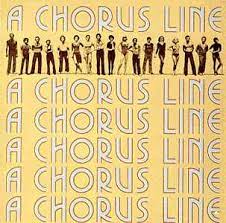
    In 1975, A Chorus Line opened in New York City, and when it closed 6,137 performances later, it was the longest running show in Broadway history. It’s an unlikely show for that distinction; it runs on a bare stage, without scenery or costumes, a plot that is more of a prelude to a story, and no stars to carry the day.  The show itself is in the guise of an audition, as aspiring dancers try to make the cut for a job, the practical realities of trying to make a living as an artist.

    The recent staging of the show at the San Francisco Playhouse makes clear why it was always more than that. Over 130 engaging minutes, the play makes the case for a life well lived; it is as rewarding now as it ever was, and ever will be. 

    The story follows a director, Zack, asking each aspiring actor to tell about themselves, to share what makes them tick. The first few actors begin with childhood memories— they were dancing, spinning and prancing since they could first walk. Mike tells about imitating his older sister as the youngest of 12, Sheila tells about escaping family violence at the ballet. These are the young, fanciful dreams of young children and we feel the solid optimism of a young child dreaming of their own success.  (“I Can Do That”,”At the Ballet”).

    In an almost imperceptible shift, the stories begin to center on the awkwardness of adolescence, the emerging changes in bodies and the self-awareness that comes with not-belonging. (“Hello Twelve, Hello Thirteen, Hello Love”,”Nothing”). The audience begins to grow up with these actors, as they begin to make adult choices for themselves (“Gimme the Ball”,”Dance: Ten; Looks: Three”). There’s no intermission in this play; how can there be, when we are busy walking our way through a lifetime? 

    Musical theater is unique among storytelling genres because an actor can stand at the edge of the stage and tell you how they are feeling and what they are thinking. That can’t happen in a movie, nor in a novel. Even in a dramatic play, it can be awkward to stage an aside to the audience. But musical theater excels at this, and A Chorus Line takes to heart what it can do best. In this performance, the actors all give solid and even performances. They make the story believable, and the time flies away. We are pulled, entertained, compelled and intrigued by the heart-stories of the actors who are, as they say, just trying to get a job.

    Or are they? Towards the end of the show, we learn that it was perhaps more than that. We have come full circle, the show now asks us to consider mortality, what we do when we can’t perform anymore, what will happen when we can’t “dance” anymore. And amidst the sad consideration, we get this oblique shot: maybe it was always about love. Nobody did this for a job after all. The last third of the show presents a depth and struggle of love, of choices, of the knowledge that none of this is permanent. Nine of the actors we have cared for are dismissed, and the other eight are given a temporary reprieve. The show goes on.

    And indeed it does. In the final number, the one scene in which costumes prevail, the unique stories fade to give way to a show, a golden gleaming chorus line, moving in unison and telling not their own stories, but performing with broad smiles, giving the audience just what it has been waiting for. Still, there is a little bit of loss at this moment, as there should be. The story we have been following has flitted just out of reach, the characters have shed their individual stories and become our expectations. Don’t get me wrong; we cheer immeasurably, everyone takes a bow— they have made it to the acme of success, and they are doing what they have wanted to do; they entertain us. We are part of the show, part of the dream they had. 

    I left the evening fulfilled, delighted, and still mulling over the arc of a show that with its barebones storytelling, pretended to be so much less. 

    p.s. You can also Lily Janiak’s fabulous review of this production from the SF Chronicle here.

  • Is the Story Really Dead?

    Is the Story Really Dead?

    Parul Sehgal’s recent New Yorker essay “Tell No Tales” has gotten under my skin. In it, she claims that “A fixation on narrative…has crowded out other forms of knowing, and caring,” and by this she seems to mean story is dead. Okay, okay, she’s not that melodramatic— the essay is actually artful and beautiful and more than pointing out that story is dead, perhaps she is pointing out that story is everywhere.

    As she writes:

    “Storytelling is what will save the kingdom… Among the other entities storytelling has recently been touted to save: wildlife, water, conservatism, your business, our streets, newspapers, San Francisco, and meaning itself. Story is our mother tongue, the argument runs.”

    And with that list, I did find myself all of a sudden exhausted, played, manipulated by the many ways that story has been invoked to make me do or feel this-or-that. It did, all of a sudden, seem that story was tired, if not completely dead. Cramming life into arcs of narrative did perhaps seem, all of a sudden, a little bit limiting, too much everywhere. But in her fastidiously laid out complaint, there does emerge another little problem:

    “I am worried about you,” a biographer friend of mine tells me. “This piece of yours— what is the alternative to story?”

    And that’s the question that I’ve been really trying to come up with an answer to, because while Sehgal’s answer is suggestive, it remained a little bit abstract. She gestured at some human emotions and moments that don’t really wrap themselves nicely into narrative arcs, but the suggestion that story has crowded those moments out is a stretch. As she herself notes, those non-narrative “moments” might be particularly hard to render. But anyone who does it well is more than welcome at the literary party, as she surely must know from the abundance of moments she picked out.

    So is there really a viable alternative to stories? Maybe it’s really true that humans are innately primed to be persuaded, consoled, and inspired by a beginning, middle, and end?

    One alternative occurs to me— one that seems just as soothing, intriguing, and captivating to the human mind. See what you think of positing this alternative to story: the before-and-after photo. This is (primarily) a visual medium that completely elides the story. In fact, it makes the story almost irrelevant— we are interested in the sharpness of the contrast and assume that the painstaking labor in between the photos is of only modest interest. This is true with weight-loss, body-building, and home-renovation photos. It perhaps even applies to those puzzles of “spot the difference” that are assumed to be for children, but I think perhaps are actually aiming for their parents and grandparents.

    Relatedly: there are time-lapse photos. I remember seeing this famous series of photos by photographer Nicholas Nixon of four sisters taken every year, and it is the reticence of the photography in telling any story at all that is so captivating. I myself have stared and stared at those photos, searching for some story, looking to trace the deepening wrinkle lines, wanting some explanation, but knowing that my own search for it is vastly more satisfying than any captions would be. Would knowing what happened in any year improve upon my feeling of mystery, satisfaction, and intrigue? No, I don’t believe so.

    Ditto for time lapse photos of children growing up, aging, or even time lapse photos of flowers blooming. That is not a story. It is also stunning. (Goodness, if you haven’t ever seen this TED talk with Louie Schwartzberg, do yourself a favor and stop reading right now and go watch it).

    And then there’s one other example that sings to me: that of gratitude, and in particular, of religious gratitude. Last spring, in Sources Journal, Joshua Cahan wrote this essay about the essence of the “story” of Passover. His point, at least in part, is that although when we (modern Jews) think of telling the “story” of Passover, we think of a narrative arc that starts in slavery, includes many different plot points, and ends with our freedom. By contrast, the “story” told in our Passover Seder is really quite different in its focus. As Cahan puts it:

    It does not tell a tale that progresses from disgrace to praise, but one that includes only these two elements: we were in a place of disgrace and God redeemed us. And the point of this explanation is not the story itself but the lesson it teaches: God came for us in our time of need and did wondrous, astonishing, supernatural things on our behalf to bring us to freedom and make a place for us in the world. What we must do in the present is be thankful for those acts, acknowledging that they were done not just for our ancestors, but for us. Our devotion to God, which we show by performing the Passover ritual, celebrating the festival, and observing all of God’s laws, flows directly from that awareness. 

    Or, to put it more simply, the “story” we tell is really not a story, but a contrast: bad to good, slavery to freedom, oppression to opportunity. It is not so much a story, but a purposeful reversal. We celebrate not an historical arc, but a moment: the moment of wondrousness, a turning over from misery to joy. The fact that we mention the slavery at all is only really a set-up, a chance to foreground the gratitude that we feel that it is no longer the case:

    This framing opens up a whole new way to read the deeply evocative but enigmatic statement that concludes the storytelling portion of the Passover Seder: “In every generation we must see ourselves as if we personally left Egypt.” Many explanations of this line take it to mean as if we had personally been enslaved, and this can be a springboard for cultivating empathy for all who are oppressed. But the Haggadah’s focus is not on slavery; it is on coming out of Egypt. Here too, slavery recedes to the background and the exodus is what matters. It is the exodus, the exhilaration of being carried to safety in God’s hands, that always needs to feel like it just happened to us. 

    But more than that, perhaps the Haggadah is gesturing not to a story after all, but to a before-and-after, to a kind of human evocation that is not a narrative. Perhaps it only distracts to tell the blow-by-blow, the details of slavery and plagues and Pharaohs. Perhaps those details are in fact a tired kind of tedium that doesn’t belong in side-by-side weight loss photos. What matters is where we were, and where we have come to now. The rest is commentary.

    Sehgal’s essay focuses on Scheherazade, which is actually a story I didn’t know, or had forgotten about. True to her focus, Sehgal doesn’t tell the story, but in case you didn’t know it either, it is the framing narrative of 1,001 nights. According to the story, the king vows to marry a virgin every night, and behead her each morning before she can dishonor him. But when he marries Scheherezade, she spins a tale every night and the king can’t bear to execute her before he finds out what happens. She manages to keep this up for 1,001 nights, drawing out the action and keeping the king on the edge of his seat. Sehgal’s point is that we too seem to act as though storytelling is the locus of our very survival. 

    And whether it is or isn’t, I think Sehgal would be the first to say: story isn’t going anywhere. But maybe, at the same time, it needn’t be everywhere.

    In other words: the story is dead, long live the story.

  • Going Wild for Cheryl Strayed

    Going Wild for Cheryl Strayed

    Last week, our indoor cat found a small opening to the wide world, and disappeared for around 100 hours before he eventually launched himself back in through a cracked window. When he came back, I had to really look at him, so did everyone, it turned out— because we all considered that maybe somehow this wasn’t really him. His sister, the one who curled up with him, day after day, now hisses at him. It’s hard to say exactly what has changed; he begs for attention a little differently, and he sleeps in a different position. And as for what has changed for him, we’ll never know really, of course. He’s a cat.

    But it’s hard not to project on him the human experience of a transformative experience, the kind where you see or do something and then have the opportunity to put everything back in a different place. Perhaps I’m just thinking of this having reread Wild by Cheryl Strayed. It’s the story of a woman who hikes the Pacific Crest Trail, and in the process reconsiders her ended-marriage, her infidelity, her mother’s death, her childhood, her relationship to money, her addictions, and ultimately what it means for her to be a woman in this world.

    When I first read it several years ago, I was totally captivated by it, and when I got to the end, I marveled at this: when you hike a trail for a couple of months, it is nothing if not monotonous. Day by day, the same type of rocks guide you, and the trail looks the same. Eventually, each campground looks like the last, and who can tell apart one stream from the next? Forget watching water boil. At the speed of walking, the landscape changes like an glacier moving steadily forward, an inch at a time. Narrating a long hike is like writing that scintillating story. Not only that, but the book was published over 15 years after her hike. How did she remember the details of the rain, the meals, the tarps, the terrain— enough to give them life over a decade later? 

    And yet, the book moves forward with so much pluck and momentum. We are rooting for this journey in so many ways, rejoicing in the small pleasures of the trail and grateful for our own un-blistered feet. I felt so incredibly engaged through the entirety of the book, so it wasn’t until I closed it again this time that I realized that I could barely say what had happened. There is no grandiose drama, there is no climactic ascent, and there isn’t even any sudden realization or healing. She doesn’t dramatically proclaim that now she has done this, she feels better. We just get to watch a person unfold herself in front of us, and her brave facing of her physical limitations gives us the confidence that she is growing.

    I have a lot of heart from the extremity of what she did, starting with ambition, but deciding to tolerate the discomforts— the unanticipated, extreme discomforts— that came not so much out of single-minded ambition, but out of the way she had set up things so that this decision became almost like the trail itself: nothing left to do but pack up and set out again, keep moving forward because what else are you going to do?

    And the kinds of realizations she has along the way, she has the opportunity not to heal the grand pain she set out with— the loss of her mother— but the hard-earned chance to see the world a little differently. At one point, she spent her last dollar, and is left with two pennies. As she considers tossing them to make a wish, she says, “I probably wouldn’t have been fearless enough to go on such a trip with so little money if I hadn’t grown up without it. I’d always though of my family’s economic standing in terms of what I didn’t get: camp and lessons and travel and college tuition and the inexplicable ease that comes when you’ve got access to a credit card that someone else is paying off. But now I could see the line between this and that— between a childhood in which I saw my mother and stepfather forging ahead over and over again with two pennies in their pocked and my own general sense that I could do it too” (280).

    And if you really pressed on this change, if you could interview her, and ask: Cheryl, what changed for you in your relationship to money after your trip? I can imagine her saying, Nothing really changed. I still didn’t have any money, I was still scrappy and made do, and fearless, and I still resented a childhood that didn’t give me many opportunities.

    Which is maybe why the book is so satisfying. It doesn’t promise anything more than it can give. It feels honest and true, and yet offers a glimpse of what it means to take your story and look at it differently. And then the artistry to make it all feel that way, literally out of a pile of rocks, makes me think that Strayed is one of the most extraordinary and under-sung American writers. If she thought she was teaching me about altitude and streams and trail markers, she was instead teaching me about the benefit of time and insight, as well as the gift you offer the world when you use words and sentences and grammar and craft to explain it all to the world. 

    And there is, of course, the lesson that she wants to impart, the one she tells us in the prologue: 

    “I looked north, in its direction— the very though of that bridge a beacon to me. I looked south, to where I’d been, to the wild land that had schooled and scorched me, and considered my options. There was only one, I knew. There was always only one.

    To keep walking.”

    We need more stories like hers.

  • Race Matters on a Sad Day

    Race Matters on a Sad Day

    Yesterday, the Supreme Court dealt a big blow backwards for racial equity, ruling that there no longer could be considerations of race in college admissions decisions.

    I mentioned this to Michael this morning, and he was confused. “Didn’t that already happen?” he asked.

    “I think you’re thinking of the UC system,” I said.

    It does feel like this has been rolled back, rolling back, always going backwards, from the very moment that the whole idea of affirmative action got started. And that’s a sad thing.

    ***

    Maybe counterintuitively, I’m going to start by being sympathetic to SCOTUS for a moment. I understand how bizarre the idea of race is when we’re talking about merit. Let’s take race as a metaphor too, and imagine that we were, having a foot race like a marathon where the idea is to be the fastest, and everybody is running their very fastest. That is, in a sense, race blind. The fastest person just is the fastest, they won, and we don’t say that they won more or less if they’re black or white. The singular metric of success also doesn’t care about training regimens, or single parenthood, or ankle reconstruction surgery over the summer. It isn’t racist if a white person or a black person wins because we’ve all agreed about the rules and the singularity of the metric of success.

    But it’s a weird, narrow way of talking about college admissions that we somehow think that that is what we’re doing. That anyone would think that what we’re doing is ferreting out the most meritorious, the “best of the best.” We’re not. Not even close. They don’t even say that’s what they’re doing.

    If you look at competitive college admission websites, they say they’re doing things like “paying attention to the shape of the whole class” and “bringing a rich array of voices to campus” and “taking lots of factors into account.”

    And they are. And you know that because on applications, they ask about where you live and what classes you took in high school, and where you went to elementary school, and what volunteer opportunities you’ve taken. They ask what you’ve done with your time and what kinds of colleges your parents went to, and how many degrees they have. Also who your siblings are and what they’re doing with their lives, and your gender, and your high school, and your rank in that high school. They look for your teachers to describe a time you were helpful and a time you were creative, and overall, they are trying to figure out what kind of human being you are. In the process, they invite you to tell them all about yourself, what you imagine doing with your life, why this college will help you do that thing. In other words, they’re trying to get to know all about you. In judgment, yes, but they keep saying how much they want to take into consideration of the whole picture.

    And even it’s true that knowing a person’s race doesn’t tell you everything about them, it is something that you know. For some students, their race might be part of the fabric of life and community and a richness of tradition. And for the record, you don’t have to be part of a minority community to have a rich experience of race that defines, supports, or challenges the sort of person you want to be. And in college admissions, where they have the conceit of wanting to know all about you, about every last volunteer job you did, or test taken, your parents’ education, it seems a little silly to suggest that race wouldn’t be a data point that would be helpful to consider. 

    ***

    But that’s not really what people are worried about, are they? They’re worried about quotas, that people might say, “enough of this sort, we need more of another sort,” and then a person of the first sort won’t have a fair chance. And maybe that first person of the first sort was very, very deserving. It gives the lie to the idea that your own individual strivings are all that matter in this country. As if it were a race and if you came in first, or fifth, and now you are somehow robbed of your rightful place. And let’s agree— if you ran a marathon, and came in first, but they decided to give the medal to someone else, that would, indeed, be very unfair. But why do people think this is what we’re doing? Why have we bought into the idea that there is some sort of singularity of personal worth that a college admissions officer can access? This is a destructive idea in more ways than affirmative action, but let’s save those considerations for another time.

    Because in the best case, leaving designated spaces for certain people can encourage someone to claim a space that maybe they should have considered for themselves all along. 

    I myself benefitted from just this sort of space-saving. A few years ago, I attended a public lecture where afterwards, participants were invited to line up to ask questions. I had loved the lecture, I was brimming with thoughts and eager for the conversation to follow, but I didn’t have a pressing question. And I didn’t line up, and I didn’t notice the lineup. But then the presenter took two questions from the long line, and then said, “okay, now I have a two-men to one-woman rule. I won’t take another question from a man until a woman asks a question.” 

    Now turning my head, I could see that the whole line of people standing to ask a question was male, every last one of them. My (female) friend sitting next to me nudged me, and I agreed, and I stood up to ask a question, joining the conversation. I can guarantee you that I wouldn’t have done that if the speaker hadn’t made that space, to make sure the audience could hear a woman’s voice and question. Was my question uniquely female? Assuredly not— at least not in this particular case.

    But it changed my mind going forward about why that line always looks like that. I benefitted from a sort of ad-hoc affirmative action that day. Because of this policy, and because time at the lecture was limited, it is true that some other person did not get a chance to ask their question. Maybe they even had a better question than I did, something more burning, an itch they more desperately needed to scratch. So on an individual level, I have no confidence that justice was done, because we’ll never know what that question would have been. But I do know that as a whole, women got their voices heard. More importantly, it made me wonder about all those things that had led me to decide that I was content to listen to other people’s questions, about what it means to have a burning question, or a desire to be heard. Maybe at another lecture, it won’t take that policy for me to bring my voice forward, or I will be able to hold space for someone else who is doubting the validity of their own question.

    So anyways, I’m sad today. We just got told that the sort of space-holding that I experienced wasn’t a communal asset, even when I felt keenly that it was of immeasurable importance to me personally. More importantly, when we get told that our racial identities don’t matter, it reduces the complexity of our interesting lives to a foot race. I’d rather live in a richer world.

  • The Piranhas are Eating the Rich

    The Piranhas are Eating the Rich

    I missed the first couple days of our collective imagining of the horror of being trapped at the bottom of the ocean, adrift, and running out of oxygen. A few days into the unfolding drama of the Titan, it was already likely that they had met the cruel fate they had waived the right to contest, signing onto risks we all do as a matter of course. I myself had signed waivers of risk for my children at trampoline parks, rock-climbing courses, ziplines— all understood to be pro-forma legal necessities for what I believed was essentially safe.

    By the time I entered the conversation about the submersible, those same signatures were being held up as evidence against the intervention that followed. They understood the risks, went the argument. On the other hand, it was hard not to feel for the people onboard, especially a young teenager. How could he resist panicked breathing, even as the oxygen was running out and he should stay calm?

    My own teenager was struggling with how to remain the right amount of sympathetic. The memes were exploding all over tik-tok, which is the oceanic depth to which he plunges every day, unable to surface. “Eat the rich,” memes proliferated, declaring it right and proper and better for the world that people with that much excess wealth be denied their plaisure domes, even if it meant dying. Another seems to retort by comparing the cost; to a person of average means, the cost of the expedition was akin to three subway sandwiches.

    “People always like trapped stories,” I mentioned. When I was a kid, the entire United States media trained its cameras on a well for several days, an 18 month-old trapped down below, while rescue missions declared they wouldn’t give up, and mothers everywhere felt their hearts explode for those poor parents. 

    And I can recall mines collapsing and international teams recording the every effort, how much worse it feels when people know they are to die. Noam mentions a case where two trapped miners knew they would die, and phones were lowered so they could say their farewells even though they couldn’t be rescued. Later, after they had certainly perished, the whole thing was filled in with concrete, so that nobody would trip down that way ever again, sealed in a tomb and buried alive.

    This maybe just captures the human imagination in a primal way, I say. It might have nothing to do with being rich.

    I bring it up with my Crossfit class, my best source of diverse (and by that I mean Conservative) views. “Has everyone been following this?” I ask.

    “You mean, how our country wasted millions of dollars of resources performing a search for people they knew blew up days before?” Tim taunts.

    “Well, I heard it wasn’t certain,” I say.

    “Oh come on!” He explodes. “Nothing, and I mean nothing, happens in the ocean, or anywhere on earth that they don’t know about.”

    I want to mention how desperately scientists and oceanographers wish that were true, how funding has been cut even to study the floating islands of trash which might be killing off ocean life, or how entirely new species are found under the depths, and how much of the entire ocean remains a complete mystery just a few miles off shore. 

    But he’s sure that the only thing that is interesting to talk about is the faux-performance of caring, a little show for the American people, and one that could have been avoided if only the government were transparent.

    Through my labored breathing in our warmup, I doubt this view: wouldn’t it have been a better show if they didn’t afterwards admit that they suspected beforehand? Doesn’t that ruin the whole effect?

    But then again, how like the government, to allow disclosure and transparency at just the wrong time, throwing monkey-wrenches into voting narratives, shoes into the machinery at just the wrong moment. I think of James Comey’s supposedly principled disclosures, two seconds before the election, or the CDC telling us not to wear masks at the beginning of the pandemic. Details like changing science or saving personal protection for doctors ruin a good narrative.

    Because the truth is, I really don’t know what a government owes its citizens or how in the world a rescue mission could have possibly confronted this tragedy.

    “They signed waivers, we’re not going to use public resources to search after private risk,” seems coldhearted.

    But pulling out all the stops for a rescue mission, especially in light of the refugees who died drowning in a ship off of Greece’s shores the same week seems tone-deaf in the other direction. 

    And anyways, who can resist putting on a show? Isn’t this equipment, the ones owned already by the government, meant to be for just exactly this scenario? Should we not amoritize the public resources we have by using them?

    In the end, of course, it doesn’t matter at all. Pulverized in a fraction of a second. Our human empathy imagining them imagining their deaths a waste of time and attention. We collectively worried for them for hundreds of years more than they worried for themselves; blissfully, they would never have seen it coming, liquified and melted into the ocean’s floor in a fraction of a second. 

    “Maybe it’s poetic justice,” someone at CrossFit suggests. “The people who were rich all got off the Titanic, at least more than the poor people did. Now it’s the rich who all die.”

    I don’t know if justice can ever be found in death, I somehow doubt it as a general principle. And this whole episode will be added to the Titanic lore, and then tucked away and forgotten, the way that I have no idea about whatever happened to that baby who fell down a well, whose fate captured America’s attention for a couple of days.

    But I do believe that in relentlessly following the drama that seemed to be unfolding, the rescue mission that kept going, we were using them, most of all. It wasn’t about the people at the bottom of that submersible, no matter how much we make it about their waivers and their money. It was about us; what does it feel like to know you will die in an impending way, and to be disconnected. It is worse than gasping for breath in a hospital bed, even though plenty of people feel that suffocation as their lungs fail at the end of life, feel as though they are gasping and there isn’t enough. They are still part of things, listening to the same beeps, speaking to the same doctors.

    But to anticipate your own death, to know that it is coming for you, and to be separate, to be trapped, to die a slow unfolding. In imagining it, we have to rehearse it, we have to feel and breathe our own gratitude so very deeply. We have to scorn them because they are suffering in a way that we can’t bring too close, have to distance ourselves from their fate because we would never be so foolish as to do that. But it’s not their foolishness. It’s our superiority.

    By all rights, we should feel relief at the fact they were instantaneously liquified. But that’s hard to feel too. What pleasure is there in a story that in the end, held no suspense at all, not even for a single second? 

    So we’ll change the story yet again, the way that Tim did. Criticizing the choice of those who lusted after a story, those who chose to use our public resources, the ones who declared a good story irresistible, the ones who turned our attention and efforts to those most privileged. However hard that story, it is infinitely easier than confronting mortality.

  • Coloring the Wizard of Oz, Updating Art

    Coloring the Wizard of Oz, Updating Art

    This past weekend, I wandered into conversation with someone who turned out to be a film archivist. I really had never thought about what that entailed, and it was wild fun it was to talk to a real film aficionado, and by that I mean people who can remember names of movies and actors, which I somehow can never do. I have written about some of these people and items, but I can’t seem to keep the names of old actors from flying their own cards out of my rolodex until only the images remain.

    Anyways, this new acquaintance was talking to me about the propensity for filmmakers to want to, after a while, re-edit their films, and what it means to preserve the originally released film. He was lamenting how hard it is to keep track or keep multiple copies, and how sometimes a re-edited version will prevail, supplanting the original with an update.

    I once read an interview with Paul McCartney where he said that he had a hard time listening to old Beatles songs because he found himself wanting to remix them. I was flabbergasted when I heard that, because the entire arsenal of Beatles songs seemed to me like utter perfection. I couldn’t imagine them any differently, both because I didn’t have any particular musical knowledge, and because it would never occur to me to rip apart the seams.

    But in trying to understand the comment, I imagined that McCartney was talking about a kind of dissatisfaction or regret. I imagined that he would say “we could have added this-or-that, or try this thing, and too bad we didn’t, and let’s fix it now.” Or perhaps even : “we meant to do this thing but ran out of time and I’d like to loop back and fulfill our original intention.”

    But my new film acquaintance had a point specifically about coloring, saying that some filmmakers want to update the coloring. This feels like a relatively minor detail of a film, and one which I wouldn’t ordinarily give much thought to. I’m one of those people who looks at the different tv’s in the store, all showing various levels of sharpness and colors, and says firmly “whatever.” I buy based on size and price and could care less what the color looks like, because it’s all fine to me. 

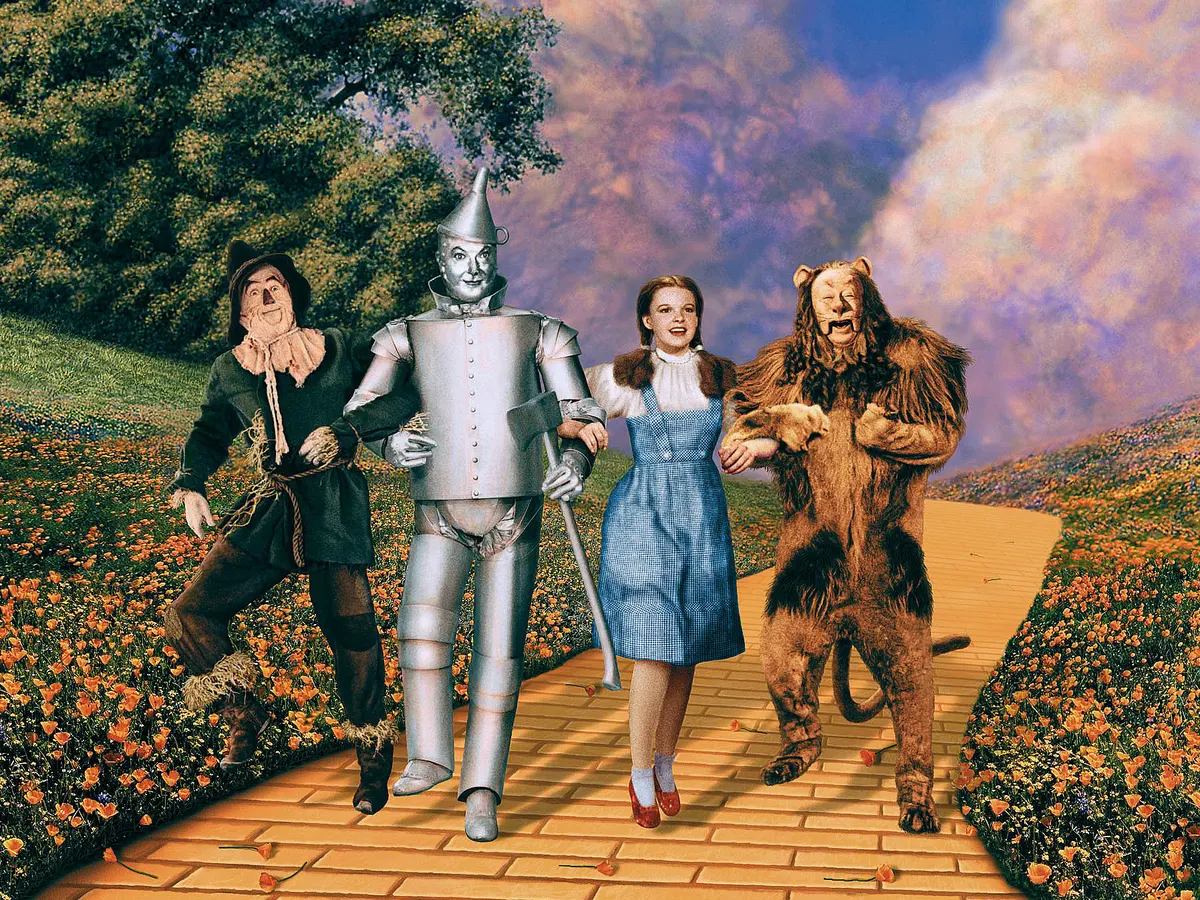
    But as he mentioned this detail about re-editing films, I immediately flashed to an image of the Wizard of Oz with Judy Garland, perhaps because that one makes its way to movie posters fairly often. And it really does have some weird saturated color, that tells you “this is an old movie” just as well as a black-and-white movie does.

    It occurs to me that when the movie was released, the colors probably felt bright and fresh, and telegraphed to the audience something bold and vibrant, not something old.

    If you want to give a modern audience an authentic experience of watching the film, the one that the director originally intended to give to an audience, what is the right answer? Do you share with them the exact colors that an audience would have seen in 1939, so that they can see it as it was originally released, even knowing that the colors will strike them differently? Or do you instead update all of the colors so they feel fresh, so that the modern audience experiences the movie as contemporarily colored (even if fantastical)?

    There is, of course, no right answer, because there are big tradeoffs. You either have to modify the “original” a lot to get to the “original feeling” (assuming you can), or you have to let the audience feel a layer of “distance” and “old” that the director never intended.

    This is an issue that is the bread-and-butter daily work of language translators. If you want to move a poem from Italian to English, how do you choose just the right words to not only express the same ideas, but evoke the same feelings? It doesn’t matter as much for translating speech between speakers, where affect and gestures and body language and facial expressions can pick up some of the slack to tell you the difference between various interpretations. 

    But in the written word, do you pick a word that feels familiar to your audience or one that feels old, or one that feels formal? You have to know not just how to say that the room is dark, but 50 other ways you might: foreboding, darkened, inky, jet black, dim, dingy, unlit, pitch black, pitch dark, and still one might not catch the sense of a joyful black, or a temporary black, or any of the other words that might swing one way or another in a given language. 

    There are plenty of academic theories that try to bridge the gap between an author’s intent and an audience’s reception, and plenty more theories to ask whether there even is such a thing as either of those.

    But I don’t want to go off the rails around that, and I mostly want to get back to Paul McCartney’s comment, which I hear differently now. Perhaps, in his saying that he would like to remix the Beatles songs, he was not saying that he wishes it had been different. Perhaps he means merely to say that times have changed, so in order to strike the audience in the same way he wanted, he needs to update them. Maybe nowadays drums come in softer or later or something, and he wants the sound to match the new aesthetic. 

    Like the way that people need to update their kitchens, whose tile countertops now scan as “old” while the marble corian whatever-whatever seems fresh. The wood cabinets that once sang now feel heavy as white paint comes to cover it up and make it airy and light. Wallpaper, whose stores shuttered themselves twenty years ago, taking with them the heavy books of texture I used to love to run my fingers over while waiting for my mother to make her selection, makes a reappearance online with wild patterns and colors and improved peel-and-stick technology. Meanwhile, “beige” has been replaced as the default neutral and now the interior design world hangs out in beautiful shades of grey.

    Which is maybe, again, what is going on with film archivists, in more subtle ways than The Wizard of Oz. Maybe a grey sky just means something different in a world of fire season and global warming. Maybe nowadays the rays of the sun are portrayed more subtly or violently or I-don’t-know-what in keeping with the sentiment of apocalypticism which modernity keeps finding reasons to churn out, whether politics or plague. 

    And even as it is a form of updating, perhaps it is a form of artistic nostalgia, to think that you could possibly strike an audience today in the same way that your work once did. The audiences that crowded into wartime movie theaters in 1939, the ones who were leaving aside worries for a nickel, and who had never seen anything like the Wizard of Oz before, will never ever be the same as the audience who has first seen Frozen and has flown on an airplane and whose next-door neighbor is a single mother, watching a streaming video on Netflix. Judy Garland still amazes, but she can’t transport the context with which I feel the film. 

    Maybe art is of a moment, and even when it holds up beautifully, there is no possibility of recapturing what it meant at the time. 

    Heraclitus once said, “You can’t step in the same river twice.” So maybe you can’t rewatch the same movie, and no amount of updating colors or drum beats will overcome the distance modernity has traveled.

    But the good news is that Heraclitus’ river is ever-refreshing in its constant tumbling forward. Thank goodness. 

  • Strangers to Ourselves, Strangely Satisfying

    Strangers to Ourselves, Strangely Satisfying

    Yesterday, when I was at the library, I walked over to the “Lucky Day” Shelf. That is the taunt, the bribe for coming into the library. It’s where the staff looks over the books that have long waiting list (I once waited over a year for Piketty’s book Capital) and puts them out for weeklong circulation, instead of the usual three-week checkout period. The books I typically request are so old that they have to be fetched out of storage, or from another library, so this is one of my favorite ways to stay-in-touch with contemporary concerns. 

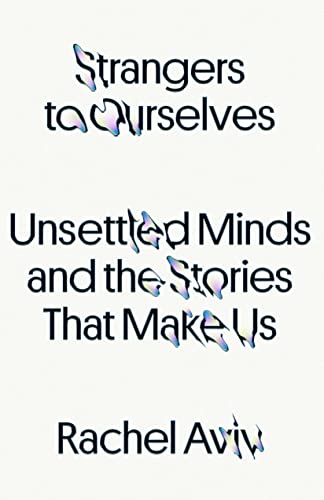
    What’s fun about disquiet? I don’t know, but there it was, Rachel Aviv’s book Strangers to Ourselves: Unsettled Minds and the Stories That Make Us. The cover itself looks disquieting, like it has been smudged. Against a white background, the title and subtitle and author name were all printed in the same large sans-serif font, in big letters, equally spaced. But then, it was though a few drops of water had fallen on the book title. It bled the letters together so I could tell what it was supposed to say, but something had gone wrong. The black letters had melted and all of the different colors that they always say make up black shine through, like a distorted prism.

    Which is to say, it is a brilliant cover for the topic of the book, which is a deep look at several people as they come into systems and institutions of psychiatry and how they (and we) continue to understand themselves in the course of distress. That sounds so opaque, because it doesn’t really hint at the immediacy of the portraits she manages to paint, beginning with herself.

    You see, Aviv was diagnosed at age six as having anorexia nervosa, and she was institutionalized so she could re-learn how to eat. It was considered an unusual diagnosis for a six-year old even then, and to the reader, it doesn’t really sound like she much had the usual and requisite symptoms for the disease. She wasn’t motivated by thinness, not really. She had normal six-year old concerns like why people don’t have tails, and how her wealthy friend Elizabeth had a pool in her house. 

    She seems to have had the curiosity of a six year old, somewhat enjoyed the way that she could make grownups fuss by refusing food, and thought it was interesting that people fast on Yom Kippur.  By contrast, the doctors wanted to talk about messaging about obesity in her family, the pathology that had led her parents to divorce, and her “over-complicated thought process.” 

    It was hard not to read the account and feel outraged on Aviv’s behalf. As she points out, she couldn’t even read yet, hadn’t encountered a critique of women’s bodies and in any event, wasn’t a woman. Her naïveté and childishness stands out in huge contrast to the pre-teen girls who took her under their wing and predictably, taught her the ways of anorexics: they taught her to pace, to do jumping jacks, and to measure their weight in ounces as well as pounds. It feels so…wrong to have taken her away from her parents, and put her in the 24/7 company of kids who were really sick.

    I’ll be book-reviewish for a second and tell you that Aviv’s writing of this episode is so incredibly compelling. She stops short of condemning the path, and puts just enough in our way to make us wonder about the whole thing without beleaguering us with questions, and wow! If this isn’t outstanding writing, I don’t know what is. 

    Because true to the ambivalent and multilayered way she tells the story, in the end, it sort of worked. The rules of the treatment were that she got to see her parents if she ate, and she wanted to do that, and as lacking in intention at the end as the beginning, she started eating. Some delicious macaroni and cheese, it turns out. Six weeks after her admission, she was discharged. While she initially brought back with her some of the anorexic behaviors she had learned in the hospital, they eventually dropped off and the whole episode became just a little curiosity in her life. 

    Aviv quotes an anorexic anthropologist, Nonja Peters, in her 1995 essay “The Ascetic Anorexic” who writes a line that may well be the path through the entire book: “Once the ascetic path is taken, ascetic behavior produces ascetic motivations— it is not the other way around.”

    This is such an apt description for Aviv’s own case. She sort of wandered into not-eating as a point of curiosity, and once the behavior was in place, it was actually work to create a set of motivations to undergird and explain the actions. 

    Once, in my twenties, I did the same thing. A family friend was in very serious medical trouble for severe anorexia. I wondered: how does a person not eat? For me, the production of a fast is such a big deal. I fast every year on Yom Kippur, and there is so much chatter about it, I really do find it difficult. I worry a lot about what I will eat beforehand, and often spend the day trying to hydrate so desperately that I end up not sleeping because my body does not actually welcome that much liquid taken in so close to bedtime. And then the whole day of fasting feels like a countdown, and I become more preoccupied by the minutes remaining until food.

    One of my college roommates was Mormon, and several months into our year living together, I learned with some degree of shock that she would fast the first Sunday of every month, as a way to intensify her prayers. She said it so lightly, as though it were a rather normal thing to do, as though she were saying, “oh yes, we have spaghetti instead of linguini,” as though it essentially made no significant difference to her day whether she were eating or not.

    So later on, with my acquaintance being in the loop of anorexia treatment, I thought that I would try it— how long could I not eat?

    The first day was actually very hard, just as I remembered. It was not the grueling spin-down of Yom Kippur, because I was drinking water, but I felt inordinately focused on not-eating. I did not wish myself any harm, nor did I have any aspirations for weight-loss, and my only goal was to try to understand: how does a person not eat?

    I learned more in the next couple of days. It got easier. Much easier, actually. By the end of the second day, it sounded so very heavy to eat food. And I felt a vague and kind of unexplained feeling of pride and almost euphoria. The idea of overcoming a natural instinct is pretty profound. Yes, I was hungry, most certainly. But there were a lot of other sensations too, like cleansing and purity and lightness, and those stood up decently well to my bodily hunger, which I could see could become somewhat easy to go to war with, to demonize as a wrong path.

    On the third day, I met a friend at the coffee shop where she liked to study, so we could do some work together. I explained that I hadn’t eaten in a few days, and with some reluctance, I accepted her view that it was probably time to end the experiment. I could see that to go further would be to normalize behaviors that wouldn’t serve me. I ordered an apple juice, drank it very slowly, and soon after returned to my usual eating habits.

    Could I have induced anorexia? I don’t have any doubt that I could have, actually. It was like standing at the edge of a diving board, looking down at a big pool. I think I knew all of the things that would happen inside that pool, so it was easy to turn around and walk back down the ladder. “No thanks, it’s better up here.”

    And so I ruminate again on Peters’ observation: “Once the ascetic path is taken, ascetic behavior produces ascetic motivations— it is not the other way around.” Had I gone another couple of days, my own brain would have produced the explanation for why I was acting that way. I would have come under the sway not only of the curiosity I felt that led to the experiment, but to a series of explanations that would have attached to the behaviors themselves. It felt like a thin line and one I could cross at will, had I wanted to.

    At the end of her introduction, Aviv writes, “The divide between the psychic hinterlands and a setting we might call normal is permeable, a fact that I find both haunting and promising. It’s startling to realize how narrowly we avoid, or miss, living radically different lives.” (27). 

    Aviv obviously spent much more time “exploring” anorexia than I did, including very significant run-ins with the treatment infrastructure. There’s a big difference between being six and being twenty-something, as I was. But it was fascinating to feel the way that the path to anorexia is somehow like a beckoning wave that tugs a little, and it’s neither quite a decision nor an accident. And then, once the wave has caught you, it becomes the definition of an entire lifetime, a “career” in psychiatric illness, as Aviv puts it. As she puts it,  ”A strange sense of abyss opens up when I think about the life I have now, and how easily it might have gone another way.”

    As I read, it occurred to me that Aviv had wandered in so lightly, wasn’t there a lighter way to have gotten her out? Couldn’t someone have come up with a childlike, playful challenge to get the food back across her lips? I feel almost certain that it could have happened that way, but maybe I’m wrong because the treatment that she had obviously led her to safety. 

    And that, I suppose, is the disquiet that Aviv feels, that she conveys in her book, that makes the whole wondering thing so satisfying. Couldn’t it have been otherwise? It could, I feel sure. And also: unsure. 

    Aviv’s reticence in writing is so satisfying. The initial story is hers, but the other chapters focus on other people, the sometimes blurry line between their sanity and illness, and the way that the lives they have led have interacted with that diagnosis. Mental illness is in part a navigation of cultural norms, and some of the stories forced a reckoning with the way that poverty, privilege, and racism can  interact with diagnoses. 

    The stories she narrates are complicated, compelling, haunting, and disturbing. Her writing is too subtle to have an argument of advocacy, but too important not to factor into larger questions of how we treat mental illness. I raced through the book, and today it goes back to the library. It’ll have to be someone else’s lucky day.  
  • Is Chocolate Milk Evil? Banning Added Sugar…and Books

    Is Chocolate Milk Evil? Banning Added Sugar…and Books

    This past month, the USDA announced that it is mulling over a plan that would ban chocolate milk in public schools. It hasn’t passed yet, and news outlets report various possibilities: perhaps just in elementary and middle schools only. Or perhaps there will be a threshold of added sugar, so certain kinds of chocolate milk might pass the test.

    I heard about this on a nutrition and health podcast, so their focus was really on whether chocolate milk is really that bad, nutritionally speaking. And also: does it serve the interests of developing healthy eating habits to demonize certain foods? I mean, why not also orange juice, or sugar-added yogurts, or for that matter, potato chips. 

    But it turns out that chocolate milk is a particular flash point.

    Earlier this year, the Mayor of New York, Eric Adams made waves for suggesting New York City schools ban chocolate milk. His proposal was perhaps complicated by his personal status as a vegan, but according to Politico, schools in Washington and San Francisco have implemented this policy already. Los Angeles Unified School District banned chocolate milk in 2011 in order to give children healthier options, allowing only unflavored milk.

    They reversed course six years later. What happened? Maybe this was a surprising outcome to lawmakers, but it was a no-brainer to this parent of actual live children: the kids threw out the milk they didn’t like.

    In this story from the LA Times, which reports on LAUSD’s reversal five years later, there was this gem:

    “Right now we are … taking garbage bags filled with milk to landfills, and that just doesn’t make any sense to me,” said board member Monica Ratliff.

    Yeah. Right.

    You can lead the kids to unflavored milk, but you can’t make them drink it.

    The way that school officials talk about proposals like this, you’d think that they were debating what children eat and drink, instead of what they have easy access to in a school cafeteria. I’m usually in favor of incremental progress and I’m the first one to say that when it comes to nutrition, small changes can really add up. But in a world where most kids in this country probably pass by a 7-11 on their way to and from school, in a world where most individually packaged milk is flavored, what makes them think that the regular world of taste buds doesn’t apply, simply because kids are in a government-sanctioned space? 

    Let’s take a pause here: is chocolate milk really that bad? Well, yes, it probably is, at least as far as added sugars are concerned. But it has some redeeming qualities as well.  It’s going to stack up pretty well against most of the items in your typical vending machine, which are designed on purpose to be addictively delicious, nutritionally vacuous, and to resist decomposing. 

    And this isn’t at all irrelevant. Some current statistics on vending machines in schools in this country suggest that about 43% of elementary schools, 74% of middle schools, and 98% of high schools have vending machines. (The source is https://www.healthyyouvending.com/schools-vending-machines/ which is obviously trying to capitalize on the perceived harms of healthy food through a capitalist and not regulatory lens). Vending machines pay the schools to host them, and these decisions are outside the purview of the USDA even though, to my view, it is much lower hanging fruit, so to speak.

    The USDA is a non-partisan agency, and the way they are considering this is about health and health policy. In other words, their question is about the added sugars inside chocolate milk, and the likely health consequences of those sugars. Secondarily, they perhaps might consider the consequences of their actions, as I have supposed they ought to do, evaluating what kids will do once they don’t have chocolate milk on the menu. But if we can get past those two considerations, there’s a lot to be said about the way that the political impulses on this might stack up, inside of a broader conversation about choice, liberty, and politics. It feels like a libertarian move to insist that the government not weigh in on what people want to drink. In this Politico article, Eric Adams, even as he looked to make this change in New York schools was quoted as recognizing the infringement :

    “We’re having a conversation about: Should we have chocolate, high-sugar milk in our schools?” Adams said in January. “Now, I’m not going to become nanny mayor. But we do need to have our children have options.”

    It feels like the choice of what to put inside one’s own body is pretty basic. Even though I’m not usually conservative, it’s tough to have a government telling you what is and is not eligible for consumption in a school. And it feels like a liberal move to try to move the needle with sweeping public policy declarations, to try to compute the number of excess calories and compare it to obesity rates and make the case for policy changes in the interest of the common good. 

    If I were a betting person and wanted to guess how this would all shake out, I’d probably just look at the political affiliations of all the people involved down the chain of decision making, and I’d predict pretty well how it’d come out based on people’s stated preferences for liberal, conservative, libertarian, Republican and Democratic affiliations.

    But to line it up this way would be a little bit of grandstanding, and here’s how I know. 

    If you go back and re-read that paragraph above, and substitute “books” for “chocolate milk,” the political positions and all that justification magically flips.

    Now it is the conservative position to protect children from things that might harm them, important for state actors to intervene and prevent them from injury. Now it’s the conservatives with sweeping concern for well-being that can be swayed with restrictive policies. And liberals go on wearing t-shirts proclaiming that good guys are never on the side of censorship, that unfettered access to absolutely everything a person might want to read is a crucial part of the freedom required to grow into a citizen.

    Yawn.

    To be clear: I’m not sanguine about banning books. I think it’s a mistake.

    But I also think it makes the same stupid mistake as the school district which bans cookies under the delusional belief that kids won’t go home and eat the same exact food if they want it.

    Banning books? Maybe that was a cute and effective strategy a hundred years ago when books were hard to come by. Any teenager with the internet isn’t going to fail to know about LGBTQ real people, leaving aside characters in a book. Any — and really, I mean, any— resourceful teenager is going to be able to get ahold of pornographic images that exceed any literary description in a school library book. I think the greater argument is about how little those school libraries matter. Would that the kids were banging down the doors asking for more books to read! 

    I’m not even going to point out that books are routinely sold in kindle format, lest someone tell me that the trouble is that those aren’t free the way that library books are. Back in the day, Napster managed to illegally circulate endless music for decades, because people wanted it. Which is to say, if the demand were high, illegal and free scans of banned books would be making their way around and we’d be having a different conversation about supporting artistic livelihoods instead of talking about possibly-problematic reading material.

    Kids live in a world where if they don’t get sugar in the chocolate milk at school, they’ll get it somewhere else. And they’re going to get their information about juicy topics from elsewhere too, books included, if they want to read books. 

    There is an argument to be made that libraries are an important resource, that it should be easy for a person to read any book they want, particularly children exploring sensitive topics, and that is all true. We can even imagine much younger children, who would benefit from being exposed to ideas outside their normal routines and family conversations. That’s the ideal. Information, healthy food, representative fiction, adequate childcare— these are all valuable public resources that we should make easy to access, and free when we can. But in the actual world we live in, it’s worth remembering that grandstanding on moral high horses, while perhaps fun, doesn’t do much more than signal what our values are. It doesn’t really change the options available to our young people, for whom school (or public libraries) are only one piece of life. 

    We all want our schools to be wholesome places, where our children can be nourished in mind and body. We want them to be safe places, where kids place trust in their teachers, who help them develop critical thinking capacity that will serve them as adults. I think it would be more helpful if we thought of those schools as not special sanctioned spaces that need to act differently than the world, but as microcosms of our own world. They are practicums for handling life, and I trust that our children will learn to navigate them splendidly. Even— if they wish— by drinking chocolate milk and reading naughty books, and even— if they have to— finding those resources outside of school.

  • If you can’t do a single pushup… instead, do this.

    If you can’t do a single pushup… instead, do this.

    When we lived in Israel, Noam used to meet a personal trainer in the park once or twice a week. The intensive training was great, but even more important was the company, structure, and  proximity of a positive role model. (For that matter, I guess that’s a reason a lot of people use personal trainers.)

    And Doron was really something special. He had written a book (Breakfast with Kings) and he regaled Noam with stories of his own Aliyah and growing up, all while quickly honing in on the music and exercises Noam liked best. With Doron’s encouragement and enthusiasm, Noam entered the citywide 5k run and his bright red sweaty face at the finish line positively glowed with pride, captured in a blurry photo which I treasure still.

    Noam’s memories of this time have faded somewhat, but they remain crystal clear for me. There was one day in particular that I feel like I watched a lesson in athletics but also is a metaphor I have grabbed onto for life.

    That afternoon, I was watching my little ones and glancing over to see Noam make his way through chair sits and monkey bars and boxing gloves before getting to the “pushups” portion of the workout.

    Now, pushups are hard. Really hard. They seem like they’d be easy, but they require small muscles and you have to support your full body weight. Some kids are good at them just because they don’t have much body weight to move, but it’s pretty common for people to not even be able to do a single pushup, or to have to move their bodies in weird ways in order to get off the ground.

    Which was the situation Noam was in.

    And surveying the struggle, Doron offered this advice:

    “You know what to do when you can’t do a pushup?”

    And Noam, body prostrated out on the ground, hands to his sides as if he were about to execute the move, jutted his chin forward to look at Doron standing over him.

    “No, what?” 

    Doron looked down at him. “You do six of them.”

    Doron was so kind and gentle, so deliciously mischievous in this moment that it didn’t occur to me at the time that this might be a draconian demand in another context. I had expected him to tell Noam to go to his knees, or put his hands up on a box, or some other modification that would “count” as a pushup, while building his muscles and moving him closer to the goalpost.

    Noam looked at him, then looked down, repositioned his hands, and executed a perfect pushup.

    The thing is, human limitations are really weird. We’re so strangely held back by our own sense of normalcy and expectations that sometimes, it takes another person to suggest that we not hold ourselves back.  When you declare a pushup to be a difficult move, it’s easy to identify as a person who can’t do a really difficult move, so of course you can’t do it, and then— here’s the weird thing— your muscles somehow conspire with that belief. You actually can’t do a pushup. And when you normalize it as a small thing that you can do a lot of, you somehow can.

    This makes me think about the oft-repeated tale about breaking the four-minute barrier in running the mile. The way that I have heard the story, professional mile-runners raced for decades after the advent of timing chips and races. The fastest time ever recorded was just over four minutes, and people thought that was the limit of human speed for that distance. Then, in 1954, a guy named Roger Bannister finished a mile just ahead of four minutes, and a short while later, this became the norm for mile-runner champions. 

    The thing that really strikes me about this is that before Bannister, it’s not like mile runners were constantly holding themselves back, thinking “oh dear, that’s impossible, I best not even try.” They weren’t thinking to themselves, “it’s impossible to get any faster at this.” No. They were professional athletes who trained every day to beat their own and others’ best recorded times so they weren’t looking at their watches and trying to asymptotically approach the far side of four minutes. They were rather running their hearts out, trying to come in as very fast as they possibly could. In fact, quite possibly, they were even oblivious to the time on the clock because who can be paying attention to that while they’re running a mile in four minutes?

    And still, the fact that they hadn’t done it before, that it had never been done before, somehow was a barrier that we can’t really explain. But when it was gone, it was swept away, pretty thoroughly it would seem. There are apparently close to 2,000 recorded sub-four minute miles recorded, and the world record, now held by Moroccan runner Hicham El Guerrouj, is close to 17 seconds faster than Bannister’s breakthrough time. How’s that for not having a limiting belief?

    And that leads me to the motivation industry, filled with people willing to step in to charge you money to tell you can sweep away your limitations with the right mindset. The space is filled with personal stories of profound transformation, and a person’s sole credential might very well be that they themselves started off worse than you did, and ended up far better.

    Somehow, a few clicks into the curious space, my social media ad targeting apparently pegged me as a person who wanted to get more clients for a personal coaching business. Now I not only see advertisements for personal coaching out of sad life circumstances, but advertisements by coaches trying to coach coaches into getting more coaching clients. It’s an additional layer of snake oil, but I can’t help but feel a great tenderness to the whole endeavor. 

    The sheer idea that you have somehow been limiting yourself can feel like a gift you have been given. All of a sudden, the life you are leading is shaken free of its rootedness and fixity, and you have been given permission to imagine something different for yourself. The mere fantasy feels like a remedy. At some moments in life, maybe it’s a welcome question to wonder: what pushup am I not doing because I’m telling myself it’s too hard?

    Because here’s another thing: although most American adults probably can’t do a pushup, the distance to getting one isn’t actually that hard. If you try a bunch of times over a bunch of weeks, those muscles build up pretty quickly.  

    So go ahead! Here’s some permission, offered for free, no coaching contract required: Dream of pushups, of new careers, relationships, unbridled successes. Imagine that nothing holds you back. Feel the exhilaration of a world welcoming your greatest desires. Whether or not it’s a realistic view of the world, the feeling itself need not be limited by our own beliefs. And when you’re flat on your belly, depleted, unable to get up, maybe this is the best time to tell yourself: it’s not one at a time. It’s not eking out one and checking off a box. You are capable of so much more. When “one” is one too many, do six instead. It’s good life advice. 

  • tick tick…Boom : A Teen Theater Musing

    tick tick…Boom : A Teen Theater Musing

    Last weekend, I saw the play tick tick…Boom with my family. This was another production of the teen theater company Upstage Theater, which is entirely powered by teens and donations. (And some ticket sales, but barely.) It’s an astonishing labor of love as they rehearse for weeks and weeks and then perform for just one weekend.

    I’ve spent a lot of years as a theater parent, and so by now I know that when you put on a theater production with teenagers, the audience consists primarily (or entirely) of people who know and love them personally. Their friends and family come, sometimes teachers (always voice teachers), or family friends, and there’s an admiration and recognition of the work that they put in. It’s a celebration of their achievements, and that’s right and proper.

    But it’s also a little bit of a shame because live theater has a lot more to offer than the achievements of its actors. I guess there’s a lot to say about what makes really great acting, including entire schools which train those actors, and I suppose a lot of people believe that “life experience” is one of the main requirements for a good actor, and that most teens can’t hack it.

    I don’t know, really, whether that’s true or not, but I will say that teens have really big feelings, bigger and more unregulated than most adults that I know. Consequently, what they can bring to the stage is nothing to sneeze at. Disappointment, fear, embarrassment, unbridled desire— these are the workaday experiences of adolescence. Unlike little-kid productions, by the time you get to a late-high school cast, those kids have something tremendous to offer.

    In this case, the musical they took on was a telling of Jonathan Larsen’s experience of turning 30. Jonathan Larsen’s name might ring a bell, and if it does, it’s probably as the composer and writer of the hit musical Rent. Rent took Broadway by storm in the mid-90’s, telling a story about a group of artists living with AIDS in NYC, loosely based on the 1896 opera La Boheme. I saw it on Broadway around the time it opened, and it was electric in its energy and felt unlike anything else I had every seen. Vital in its urgent contemporary storytelling, the story brought me deeply into an urban world where the cast of characters grappled with loss and heartbreak.

    I thought that tick tick… Boom might be in some ways a telling of the writing of Rent, a little bit of how Shakespeare in Love took on the creation of Romeo and Juliet, or for that matter, the way that Something Rotten does the same. Those stories are in some ways love letters to their subject matter, nodding and winking to the audience all along, a sort of spin out, not quite of fan fiction, but of a dramatization that led to this love.

    But it isn’t that.

    tick tick… Boom is a telling of Larson’s experience of turning 30 and his grave disappointment and confusion about what his life is and isn’t. In the opening scene, he disparagingly refers to himself as a “promising young composer” whose promise maybe is all promised-out. He knows that he is incredibly talented, he just can’t explain why he hasn’t been even a little bit successful. Mostly, the audience seems him as someone waiting for something to happen, even as he desperately tries to make it happen.

    It made me think about how very few stories take on this moment of being in your late 20’s in a way that isn’t fully focused on romance. I mean, there are lots and lots of movies, tv shows, and probably even plays which take on the dating world, almost always portraying their protagonists as early career. The life work of that time period is, I suppose, to become partnered and then move on with life.

    tick tick…Boom, true to the autobiography of Larson, has him with a girlfriend even while his angst isn’t around his romantic future, it’s about his art. There is one line that sums up this angst more beautifully than the rest. When discussing some work by other artists that already had made its way to Broadway, Larson describes his feelings about that other artist’s success as a mixture of “envy and contempt.” That line, that combination, felt jaw-droppingly precise to me. Larsen condemns every artistic move towards “selling out” alongside his own very fervent wish that he could do the same. I have felt that same ambivalence, but it it isn’t really a mixture, not really. It is complete and total full-on envy, alongside complete and total full-on contempt. 

    Larsen compared himself to the success stories, and felt he measured up poorly. He wanted to follow in their footsteps, but maybe not as much as he felt he deserved to be leading the way. The play makes clear his disappointment, his earnest efforts, his eagerness to make something of his life, his tangled humility and bravado.

    And so to watch teens perform this, teens who are ten years away from these feelings, but on their way, felt somehow so fitting. They’re close to this striving— closer than I am. And they did it with great aplomb. Bravo to Upstage Theater, and to teen actors, and a virtual toast also to Jonathan Larsen who achieved some great life’s work after all, squeaking in a great artistic victory before succumbing to an early death. I’m so glad I got to see it.

    Ariella Radwin is a writer and theater enthusiast who has spent decades of her life watching her children and their friends perform. She will never tire of applauding for young people who put their hearts and souls and entire selves into small and intimate performances.